Language as a Bridge in Cultivating Global Cohesion and Intercultural Harmony
After a heavy AI focus of ICLTE 2026, we are moving toward the "Human Heart" of language which should feel like a necessary breath of fresh air for international academic community.
In a world where AI can translate words instantly, the real challenge for 2027 and ahead is translating intentions, emotions, and shared human values.
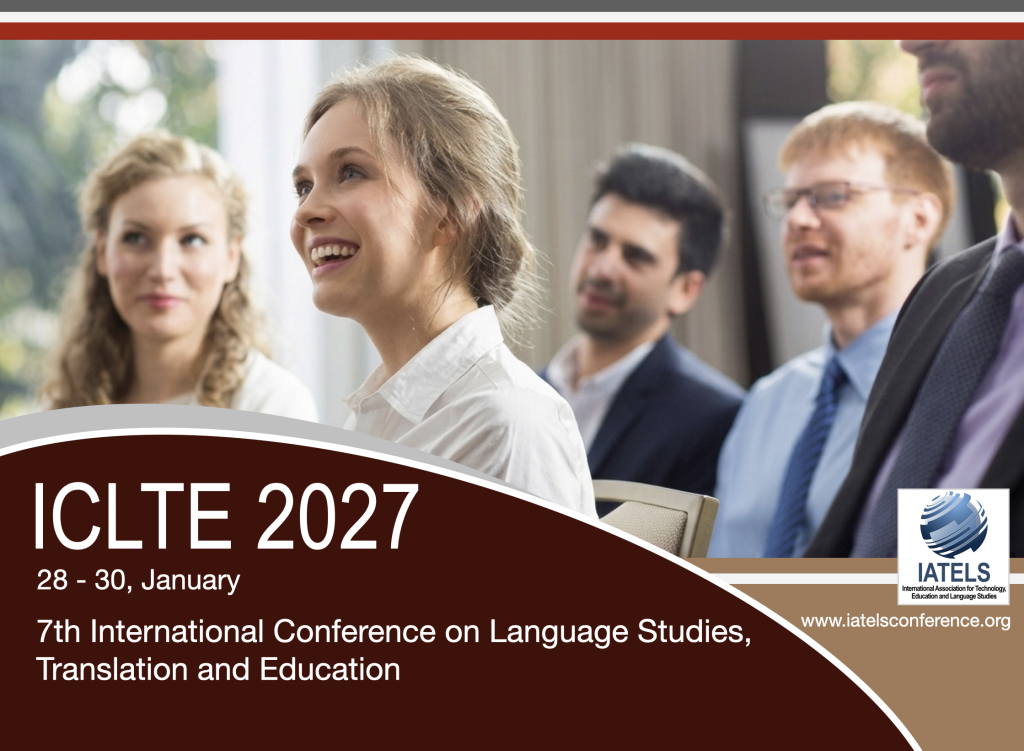
ICLTE 2027: Language as a Bridge — Cultivating Global Cohesion and Intercultural Harmony
This ICLTE edition moves beyond AI aspects to positioning language studies as a vital instrument for peace-building, mutual understanding and the reduction of global conflict.
The conference focuses on developing linguistic empathy, empowering educators to transform classrooms into spaces where learning a new language becomes an act of seeing the world through the eyes of others.
By prioritizing human connection over techniques and rules, ICLTE 2027 seeks to foster a profound sense of Global Citizenship and international unity in an increasingly fragmented world through the correspondent angle in language studies, translation and education.

ICLTE 2027 Key Tracks
Linguistic Empathy in the 21st Century
Language Education for Social Justice and Peace
Breaking Barriers: Dialogue as a Tool for International Unity
Heritage Languages and the Future of International Relations
*** Linguistic Empathy in the 21st Century -This track invites research that explores the psychological and cognitive dimensions of how language learning fosters deep emotional connection and the ability to perceive the world through diverse cultural lenses. We welcome studies on the development of "empathetic listening," the role of emotional intelligence in second language acquisition, and how pedagogical shifts from "fluency" to "understanding" can humanize digital and physical interactions. Submissions may range from neurolinguistic research on perspective-taking to classroom case studies on cultivating compassion through multilingual literature and storytelling.
*** Language Education for Social Justice and Peace - This line focuses on the transformative power of the classroom to act as a catalyst for systemic change and the peaceful resolution of societal conflicts. We seek contributions examining inclusive curriculum design, the protection of endangered or heritage languages, and strategies for empowering marginalized voices through linguistic advocacy. Researchers and practitioners are encouraged to submit work on critical pedagogy, language policy as a tool for equity, and the role of educators in fostering resilience and reconciliation in post-conflict or polarized environments.
*** Breaking Barriers: Dialogue as a Tool for International Unity - This track serves as a multidisciplinary forum for analyzing how authentic communication serves as the primary driver for global diplomacy, institutional collaboration, and cross-border solidarity. We invite studies on intercultural communicative competence, the pragmatics of international negotiation, and the evolution of "global Englishes" or lingua francas as shared spaces for cooperation. Whether focusing on professional communication in global industries or grassroots digital activism, this line welcomes research that demonstrates how dialogue transcends physical and political borders to build a unified global community.
*** Heritage Languages and the Future of International Relations - This track examines how the preservation and promotion of heritage languages serve as a sophisticated tool for soft power, cultural diplomacy, and the strengthening of global institutional ties. It invites research on how ancestral linguistic identities provide a unique foundation for international relations, moving beyond traditional diplomacy to foster deep-rooted trust between diverse communities and nations. Submissions are encouraged from fields such as sociolinguistics, political science, and pedagogy to explore how honoring one’s linguistic roots can act as a catalyst for global social cohesion and mutual respect.
Psychology of Human-to-Human Communication
Emotional Intelligence in Language Acquisition
Authenticity and Voice
Social Cohesion in the Multilingual Classroom
*** Psychology of Human-to-Human Communication - This track explores the deep-seated emotional and cognitive processes that allow humans to move beyond simple information exchange to achieve true interpersonal resonance. It invites research on how non-verbal cues, active listening, and the "Human Factor" create authentic psychological bonds that machines cannot replicate. Submissions should focus on the mental frameworks of mutual understanding and how these psychological drivers form the foundation of all successful international cooperation.
*** Emotional Intelligence in Language Acquisition - This track examines the critical role of EQ as the "silent engine" behind successful language learning and intercultural adaptation. It focuses on how self-awareness and empathy allow learners to navigate the vulnerability of speaking a new tongue while building genuine connections. Submissions are invited on the impact of emotional resilience in the classroom and how managing "linguistic anxiety" can unlock a deeper, more human-centric mastery of language.
*** Social Cohesion in the Multilingual Classroom - This track explores how the multilingual classroom serves as a vital laboratory for practicing social inclusion and mutual respect. It focuses on pedagogical strategies that treat diverse linguistic backgrounds not as barriers, but as shared assets for building a unified student community. Submissions are invited on how translanguaging and plurilingual identities can actively dismantle prejudice and foster a profound sense of belonging among learners from all corners of the globe.
*** Authenticity and Voice - This track emphasizes the human signature in communication, exploring how individual expression and personal narrative remain the irreplaceable core of language. It invites research on how learners and educators find their "true voice" to build trust and credibility in a world of automated content. Submissions should focus on the pedagogy of authentic self-expression and how maintaining a unique linguistic identity is the ultimate key to meaningful international dialogue.
1- What is special about IATELS Conferences?
IATELS conferences are unique because they are specifically designed to bring together a diverse international community of researchers and educators from all cultural backgrounds to focus on the interdisciplinary intersection of technology, education, and language studies. They emphasize providing opportunities for career development, self-realization, and supporting researchers at every stage of their career, regardless of their background.2- What are the benefits of IATELS membership?
The benefits of IATELS membership include discounted rates for events and programs, publishing opportunities, career support, a chance to join an international community of professionals for developing more collaborative frameworks in education and research, a way to an international academic expertise to learn from.3- Can an institution become an IATELS partner and what are the benefits of the group membership?
Yes, an institution can become an IATELS partner through an institutional membership. For group membership, the primary benefit is that a group of colleagues can enjoy all the benefits of membership together at a discounted rate.4- What kind of international benefits does an institution get when becoming an IATELS partner?
Institutional partners of IATELS get several international benefits, including the ability to develop their own educational programs, initiate and participate in international projects, and extend their professional reach. They can also get their work published and announced on the IATELS community website and other media, and have the opportunity to establish and develop a local IATELS representation in their area.5- Do IATELS Conferences publish papers in Scopus-indexed journals?
Publishing in Scopus-indexed journals is not among the publication plans of IATELS Conferences. The submitted abstracts after reviewing are published in Abstract Books with ISBN numbers, Conference papers are reviewed for publishing in Conference Proceedings with ISBN numbers which can be submitted for indexing in Web of Science, academic extended manuscripts can be evaluated for publishing as chapters in international thematic monographs to be submitted for publishing in Springer Publishing House as projects curated by IATELS Committee.Submission and Publication
We invite you to submit your abstracts by January, 10, 2027.
The submission should include:
- Abstract: A concise summary of your presentation, up to 250 words.
- Author(s) Bio: A brief biography of each author, up to 100 words.
- Authors' formal pictures.
The conference's international reviewing board evaluate all the submissions and return with their feedback.
The registration fee is to be paid only after the submission is approved.
+ All accepted and registered abstracts will be published in Book of Abstracts with ISBN number.
+ A selection of high-quality full papers will be invited for reviewing as monograph chapters and publishing by Springer.
Chapter Submission Requirements:
- Volume & Structure: Chapters should be 8,000 to 10,000 words in length, including references. The manuscript must follow a standard academic structure: Title, Author(s) Information, Abstract (250 words), Keywords, Introduction, Literature Review, Methodology (if applicable), Results/Findings, Discussion, Conclusion, and References.
- Content: All submissions must be original, unpublished work. The content should be innovative and make a significant contribution to the field. Papers that are internationally valued, with a clear focus on addressing contemporary global issues, will be given preference.
- Deadline: The deadline for submitting full manuscripts is March, 10, 2027.
Meet ICLTE 2027 Partner Organizations
STARTINFORUM
International Project Management in Business and Education, Sponsor of IATELS, Turkiye

Kyiv National Economic University named after Vadym Hetman
IATELS Partner Organization, Ukraine

University of Management and Technology
IATELS Partner Organization, Pakistan

Taras Shevchenko National University of Kyiv
IATELS Partner Organization, Ukraine