

ICLTE 2026: Balancing Hyperreality, AI Ethics, and Human-Centric Pedagogy
ICLTE 2026 Recap: Final Day
The 6th International Conference on Language Studies, Translation and Education (ICLTE 2026) concluded its final day with a profound reflection on the “familial atmosphere” that has come to define this global academic community.
Moving beyond traditional boundaries, the final sessions bridged the gap between cinematic hyperreality, the limitations of machine translation, and the psychological impact of AI on the future of education.
Cinematic Hyperreality and Symbolic Control
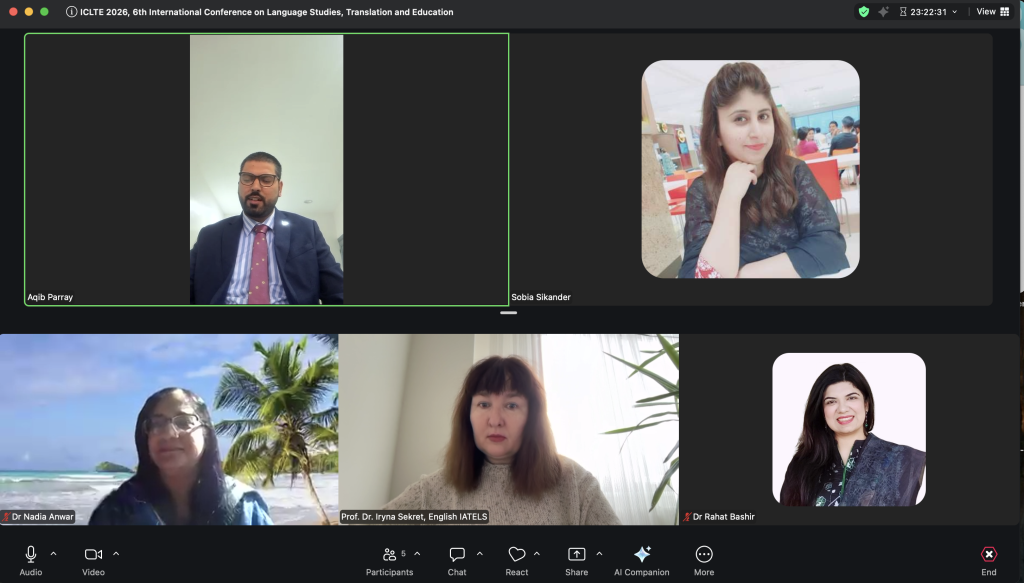
The session, chaired by Assist. Prof. Dr. Aqib Javed Peri (Prince Sattam Bin Abdul Aziz University Pakistan)—whose own work explores Muslim philosophers in cinema—opened with a provocative analysis of Don DeLillo’s Cosmopolis and its film adaptation by David Cronenberg.
Sobia Sikandar (University of Management and Technology Lahore, Pakistan) presented research on the “Hyperreal Control of the Psyche,” demonstrating how language and visual imagery depict the psychological imprisonment of individuals in a consumer-driven world.
The discussion, enriched by Dr. Aqib’s insights into color symbolism, highlighted how intermedial simulations of subjectivities are increasingly relevant in our own digitally mediated lives.

AI in Education: Assistant, Not Architect
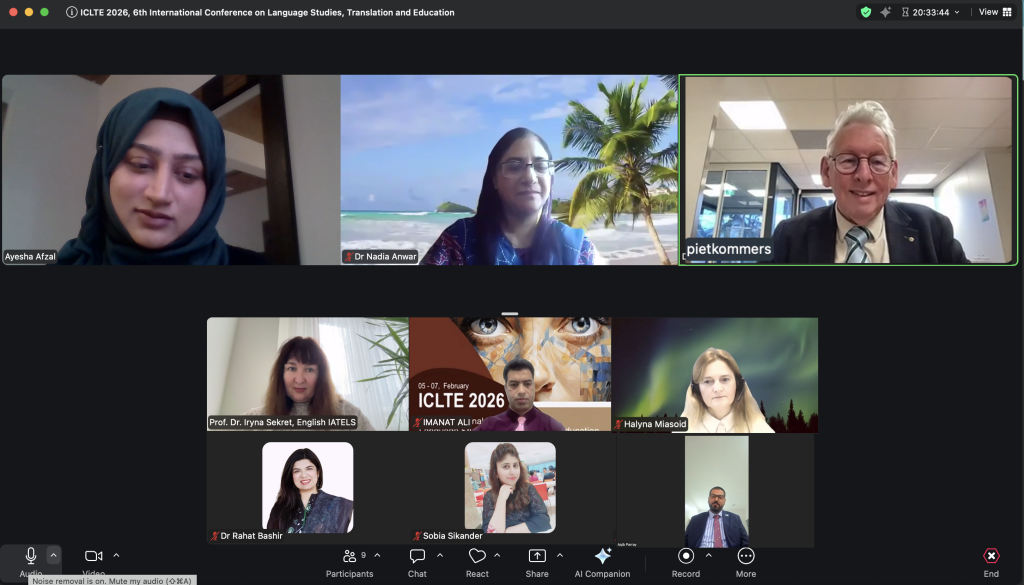
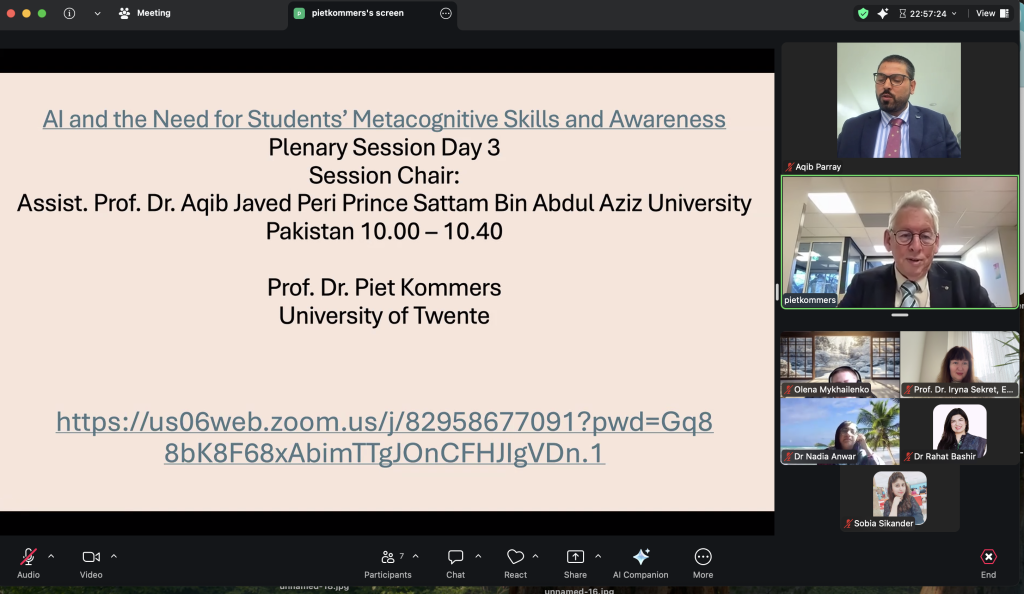
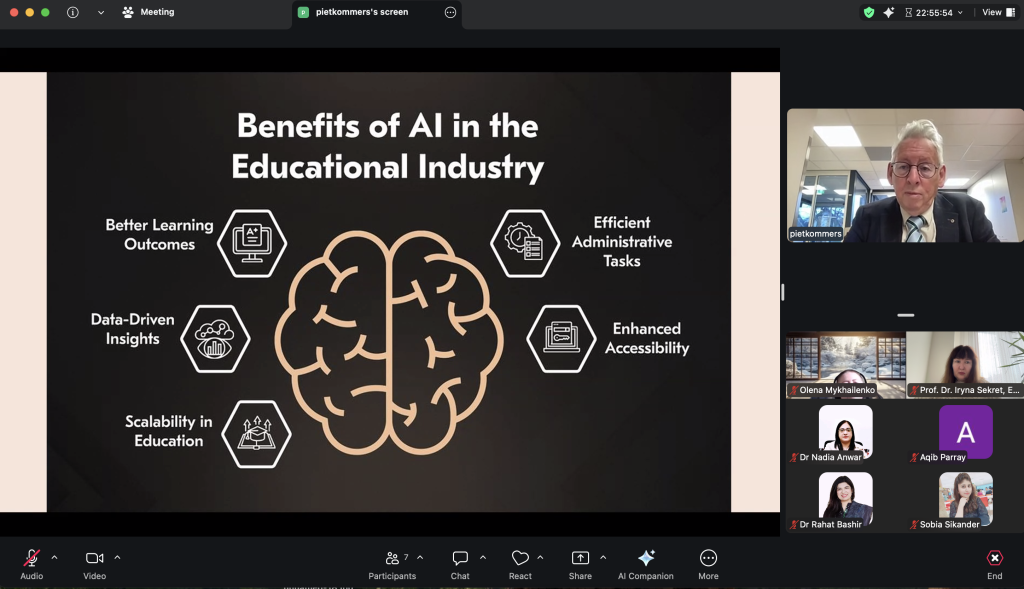
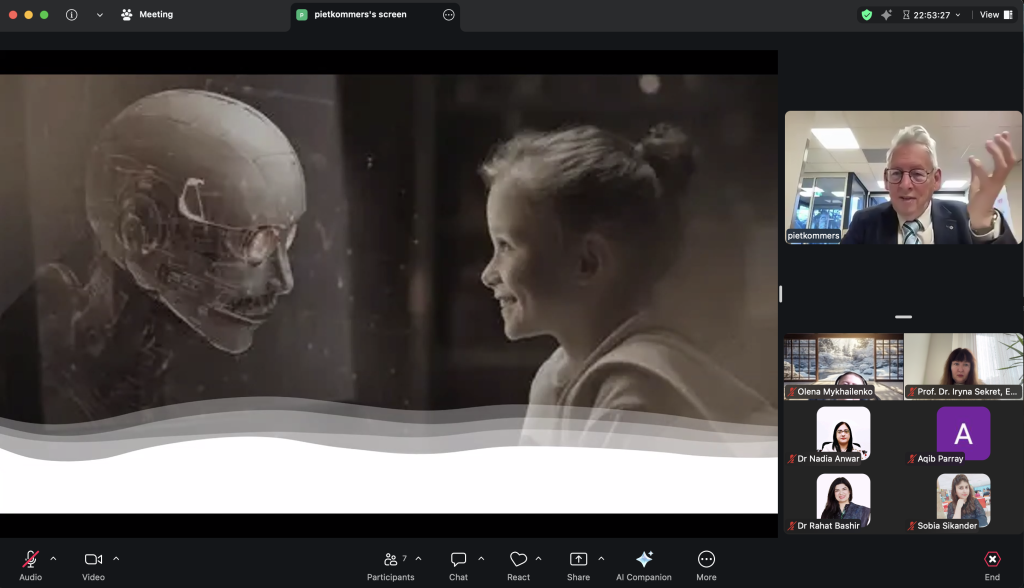
Keynote speaker Prof. Dr. Piet Kommers (Netherlands) led a deep dive into the integration of AI within the STEAM approach. While recognizing AI as a powerful tool for courseware generation, Kommers issued a stark warning regarding the “manipulation of reality.”
- Data Shifts: Small shifts in AI-driven data can lead to skewed historical interpretations and a degradation of societal values.
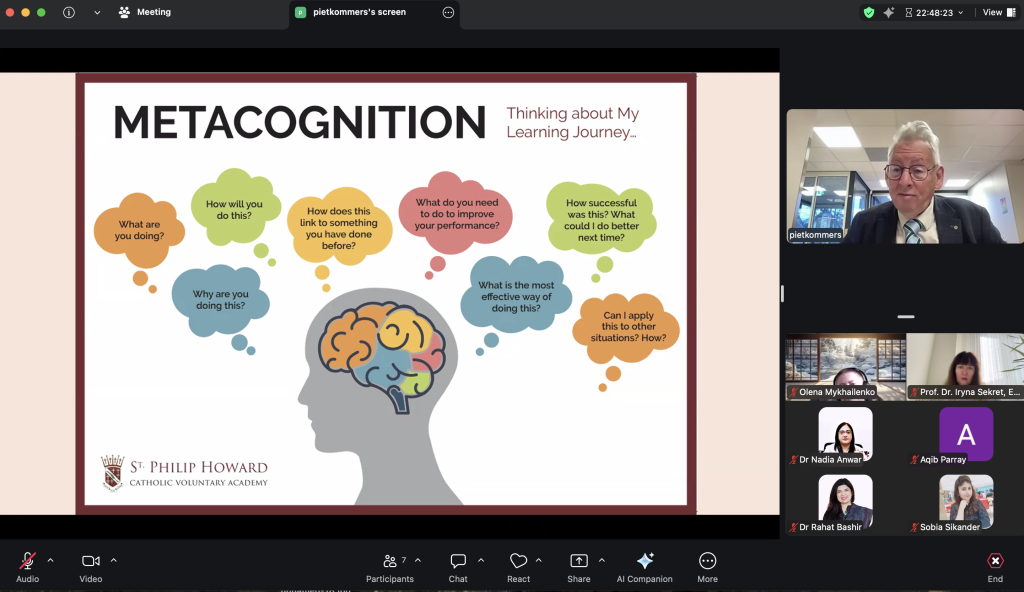
- The Metacognition Factor: The consensus among participants was that critical thinking and metacognition are the only shields against AI-driven misinformation.
- The Human Oversight Model: Whether in business development or classroom quizzes, “Human-in-the-loop” remains a non-negotiable requirement for ethical AI use.


The Future of Scientific Translation
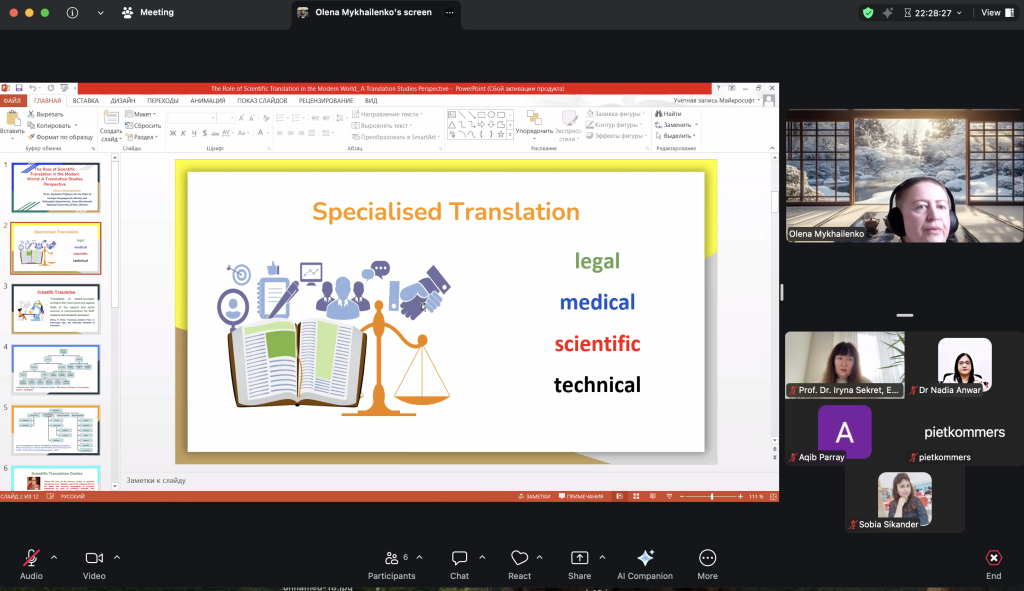
Assoc. Prof., Dr. Olena Mykhailenko (Taras Shevchenko National University of Kyiv, Ukraine) presented a Translation Studies perspective on scientific discourse. Despite the rise of sophisticated Neural Machine Translation, the research concluded that:
- Human Precision: Human translators remain essential for the rigorous precision required in scientific terminology.
- Complementary Workflows: AI tools should be viewed as complements that handle repetitive tasks, allowing human translators to focus on cultural and contextual complexities that machines still struggle to navigate.



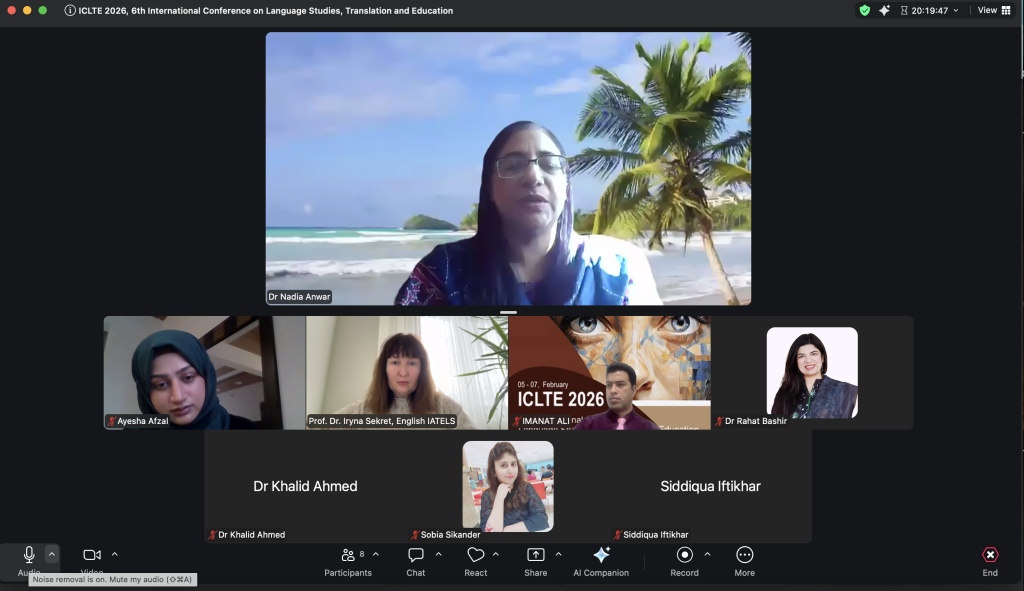
The conference discussions continued with the session chaired by Dr. Khalid Ahmed (Faculty of Education & Liberal Arts (FELA) INTI INTERNATIONAL UNIVERSITY Malaysia) and Mah e Nao (University of Management and Technology, Lahore, Pakistan).
Digital Tools and Gamification: Vevox and Beyond
Halyna demonstrated the practical application of Vevox, an AI-powered quiz platform. While the tool successfully fosters student engagement and academic speaking skills, it faces significant limitations:
- Assessment Gaps: Current AI tools lack the rubric features and cognitive depth needed to assess open-ended questions.
- Formative vs. Summative: Future research is needed to determine if AI-embedded quizzes can truly replace traditional summative assessments without losing pedagogical rigor.


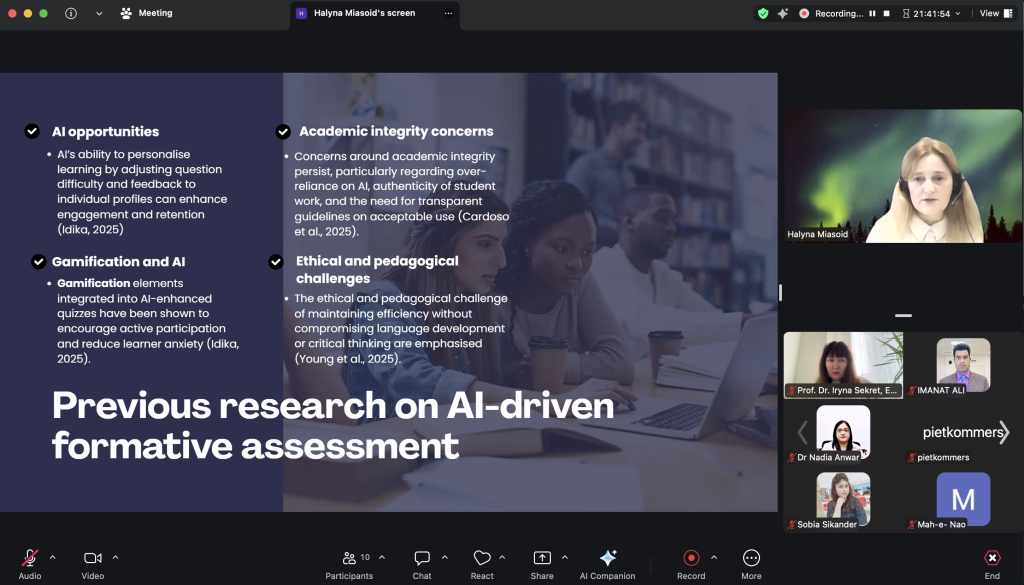
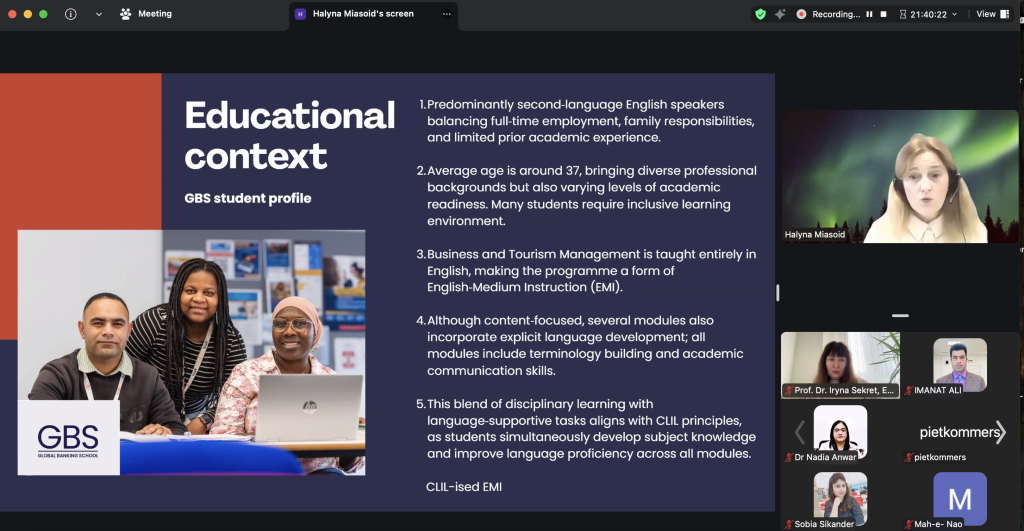
The session continued with discussing AI’s role in education and society by Iryna Hryshchuk
Department of Foreign Languages, Faculty of Marketing Kyiv National Economic University named after Vadym Hetman Kyiv, Ukraine.
Prof. Dr. Piet Kommers shared his experiences and insights. He highlighted how AI can be used to manipulate reality through slight shifts in data, raising concerns about its potential impact on historical interpretations and societal values.
Prof. Dr. Kommers also shared an example of how practical, hands-on learning can motivate students, contrasting it with the traditional national-oriented education approach. The discussion touched on the importance of educators, parents, and students in shaping ethical criteria and societal values in the face of AI’s influence
Postmodern Critiques and Abandoned Spaces
The conference took an unexpected turn into cultural consciousness with two standout presentations:
- Frozen 2 as Political Critique: Siddiqua argued that Disney’s Frozen 2 is far from a neutral family film. Through “ideological interruption” and ecological allegory, the film stages a postmodern critique of American cultural consciousness.
- Pedagogy of the Abandoned: Ayesha Afzal presented haunting research on “abandoned educational spaces.” She explored how empty classrooms and leftover materials continue to “teach” lessons about authority, discipline, and systemic failure, even after the institutions have ceased to function.


Looking Ahead: Erasmus+ and Future Symposia
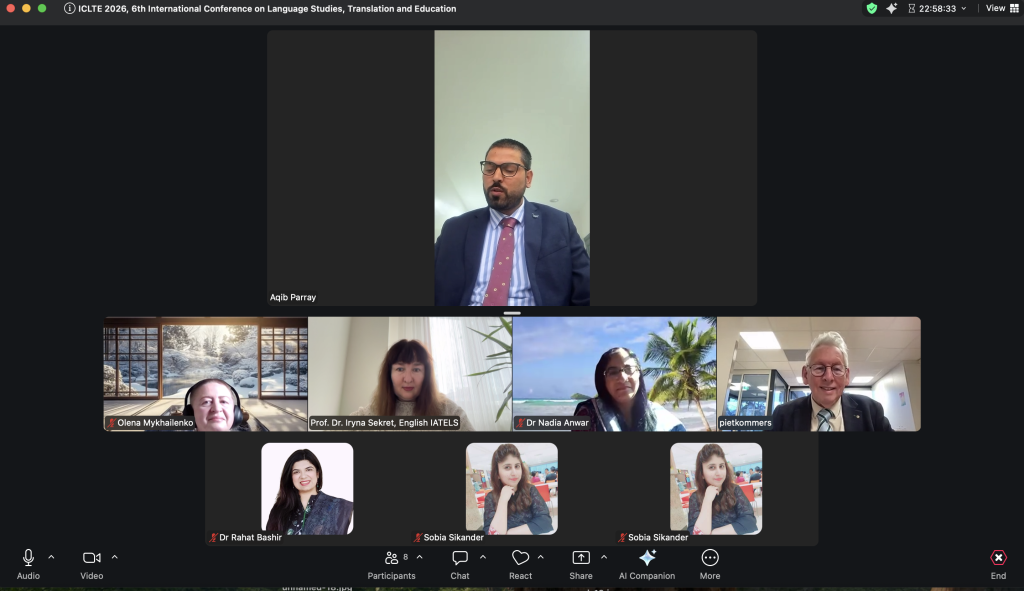
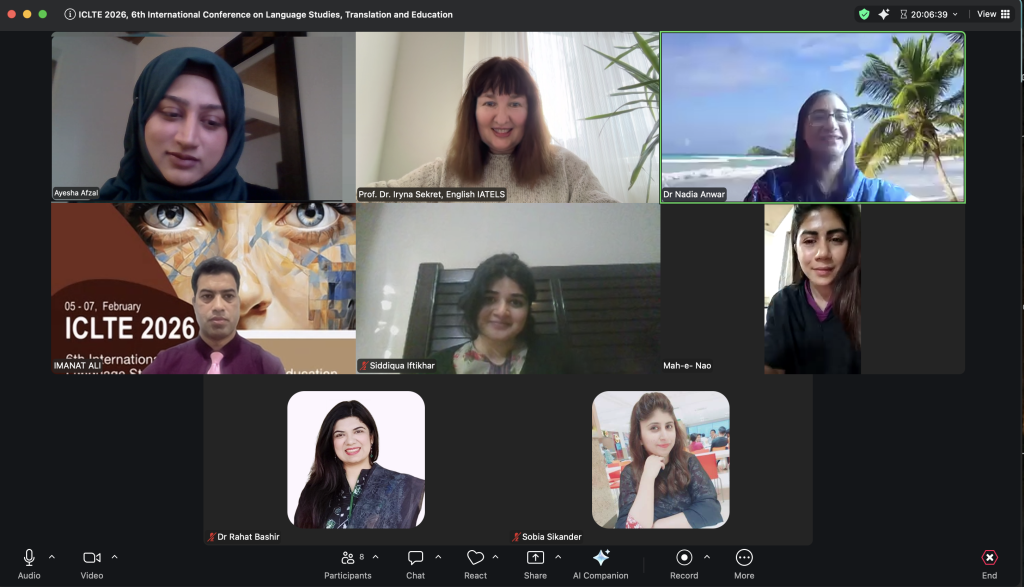
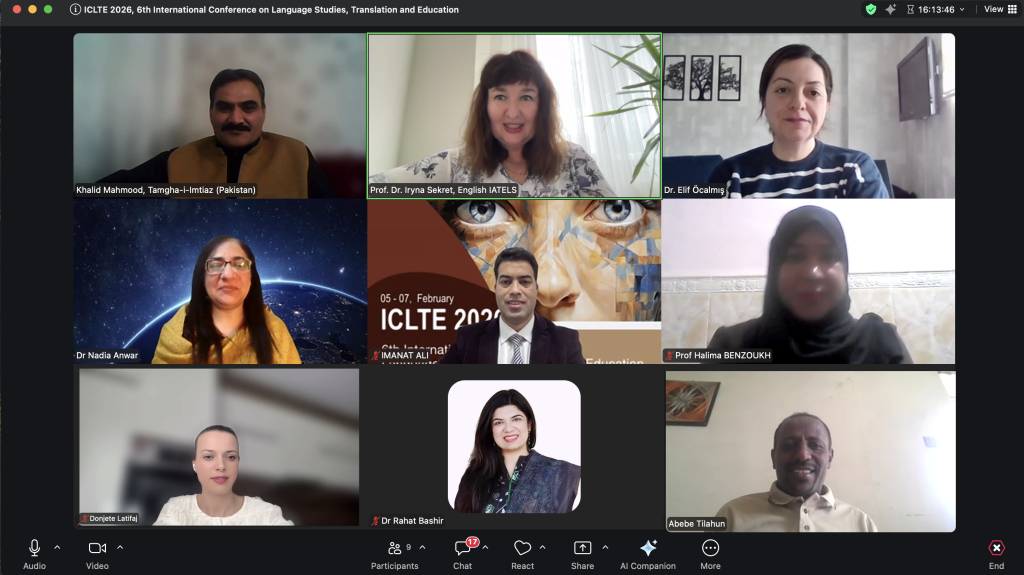
As the final day concluded with a traditional group photo, Prof. Dr. Iryna and Prof. Dr. Nadia Anwar outlined the road ahead for IATELS and its partners:
Key Initiatives & Deadlines:
- Springer Monograph: All presenters are invited to submit extended manuscripts within one month for consideration in the upcoming Springer Monograph project.
- Erasmus+ Milestone: STARTINFORUM, the sponsoring organization of IATELS, celebrated the start of a new 4-year Erasmus project launching in November 2026, promising new opportunities for international mobility and research.
- Upcoming Conferences: Calls for papers are now open for the April 2026 ICET 2026 Conference (International Conference on Education and Technology) and APBM 2026 in October 2026.
- Book of Abstracts: The organizing team will begin finalizing the official Book of Abstracts at once after the end of the conference.
Closing Words
The ICLTE 2026 conference proved that even in an age of AI, the “human dimension” is irreplaceable.
From the resilience of our Ukrainian colleagues to the critical analysis of postmodern media, the conference served as a reminder that education is not just about the transfer of information, but the cultivation of human values, ethics, and connections.

Next Steps
It has been an incredible journey over the last few days at ICLTE 2026, and as we close this chapter, we look forward to the many collaborative milestones ahead.
Upcoming Deadlines & Opportunities
- Springer Monograph Submission: All participants are invited to submit their extended abstracts or full manuscripts within one month for consideration in our Springer Monograph project.
- Conference Reflections: We encourage you to share your experiences and reflections as blog posts for the official conference website.
- Book of Abstracts: The organizing team is now finalizing the official Book of Abstracts, which will be released shortly after the conference.
- Certificates: Presenters will receive their certificates and letters of appreciation via email.
- Erasmus+ Project: Keep an eye out for updates regarding the new 4-year Erasmus project starting in November 2026 with STARTINFORUM as the official partner of the international project consortium. The project is going to offer significant opportunities for future mobility and research.
- Upcoming Events: Mark your calendars for ICET 2026 in April 2026 – 8th International Conference on Education and Technology, and APBM 2026 in October 2026 focussing on Sustainability.
Thank you for being part of this “familial” academic atmosphere. We are excited to see these connections transform into the research projects and publications of tomorrow.







Leave a Reply