
ICLTE 2026: Where Cultural Heritage Meets the AI Frontier
ICLTE 2026 Recap – Day 1
The first day of the 6th International Conference on Language Studies, Translation and Education (ICLTE 2026) proved that while technology is moving at light-speed, the heart of education remains deeply rooted in identity, culture, and ethics.
From the foggy coastlines of Ireland to the ancient scripts of the Punjab, the sessions highlighted a world where AI doesn’t just automate—it bridges.
Here is the full recap of the breakthroughs and discussions from the first day of ICLTE 2026 presentations and discussions.
Discourse and Identity: The Tourism Lens
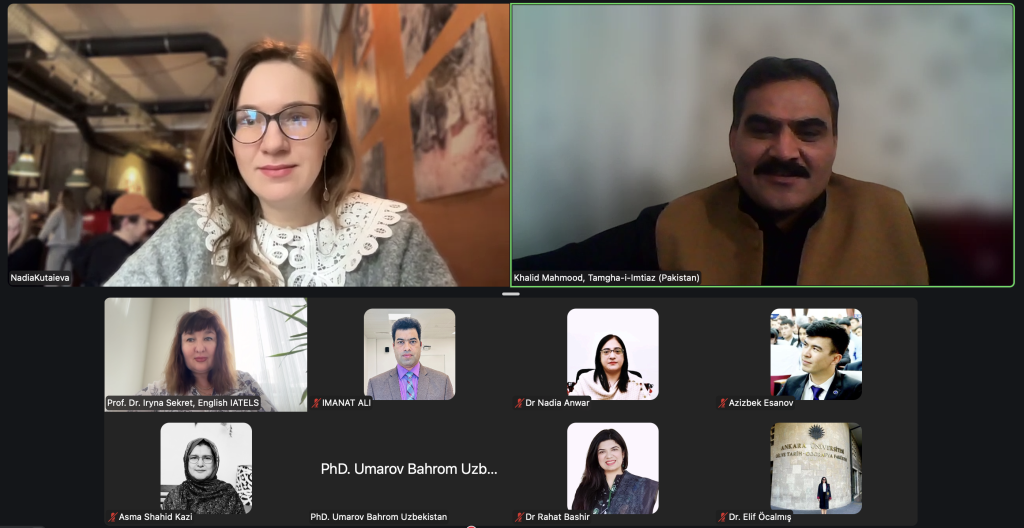
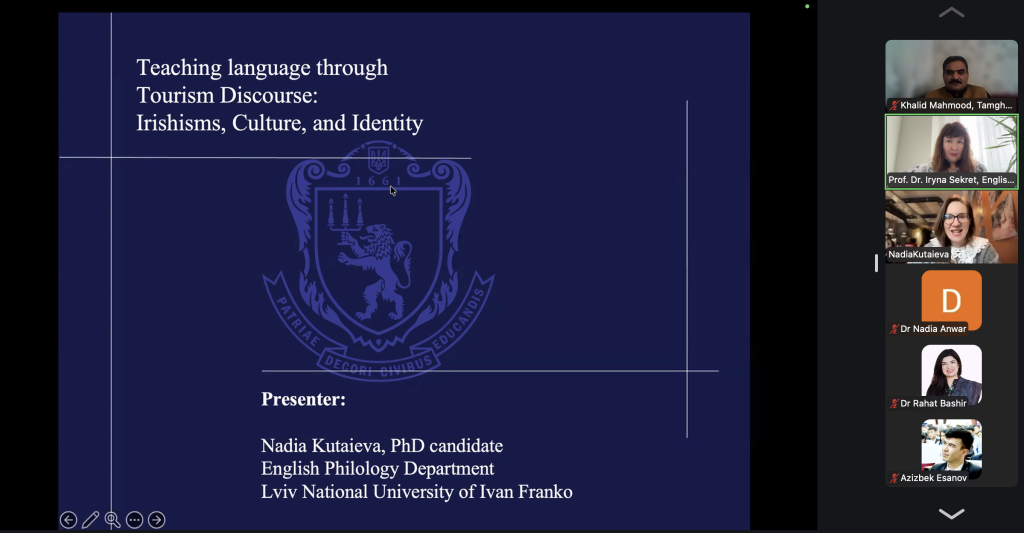
The session began with a fascinating exploration of “Tourism Discourse” led by Nadia Kutaieva. Her presentation on Irish cultural elements—or “Irishisms”—demonstrated how language isn’t just a set of rules, but a vehicle for identity.
- Cultural Sensitivity: A spirited discussion followed, led by Prof. Dr, Iryna Sekret, on the ethics of teaching cultural traits (like Ireland’s famous pub culture) while maintaining pedagogical sensitivity across diverse global backgrounds.
- The Takeaway: Teaching a language through its tourism discourse helps students move beyond “classroom English” to genuine cross-cultural communication.


The ESP Revolution: AI as the Co-Designer
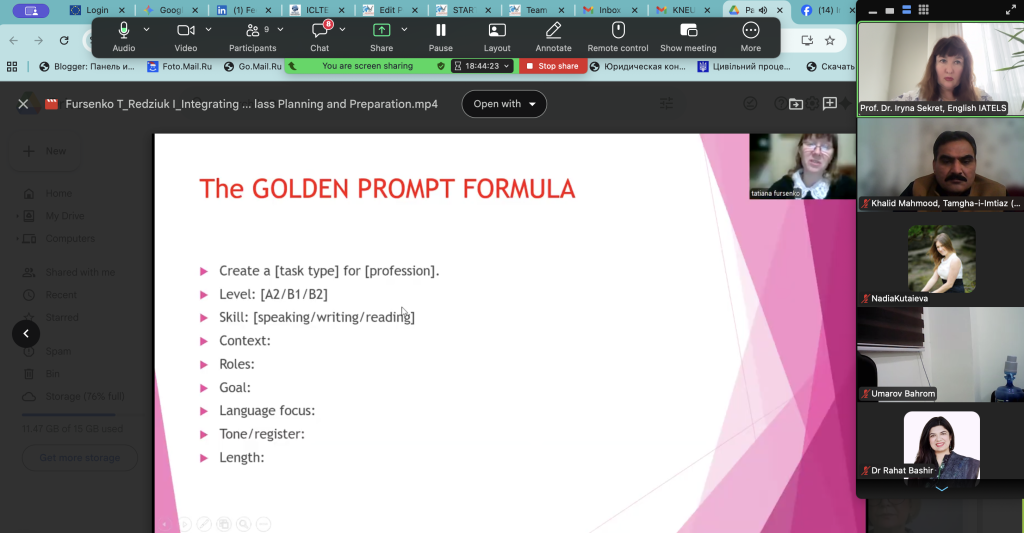
Associate Professor Dr. Tatyana Fursenko and Iryna Redziuk showcased the “new normal” for English for Specific Purposes (ESP). They presented a framework where AI acts as a teaching assistant during the four critical pillars of course design:
- Needs Analysis: Using AI to analyze industry-specific discourse.
- Material Design: Generating interactive content tailored to economists, engineers, or historians in seconds.
- The “Lim-Kyiv” Bridge: The session sparked immediate talk of collaborative projects between universities in Ukraine and global partners to pilot these AI-enhanced materials.
Bridging the Script Divide: The Punjabi Revival
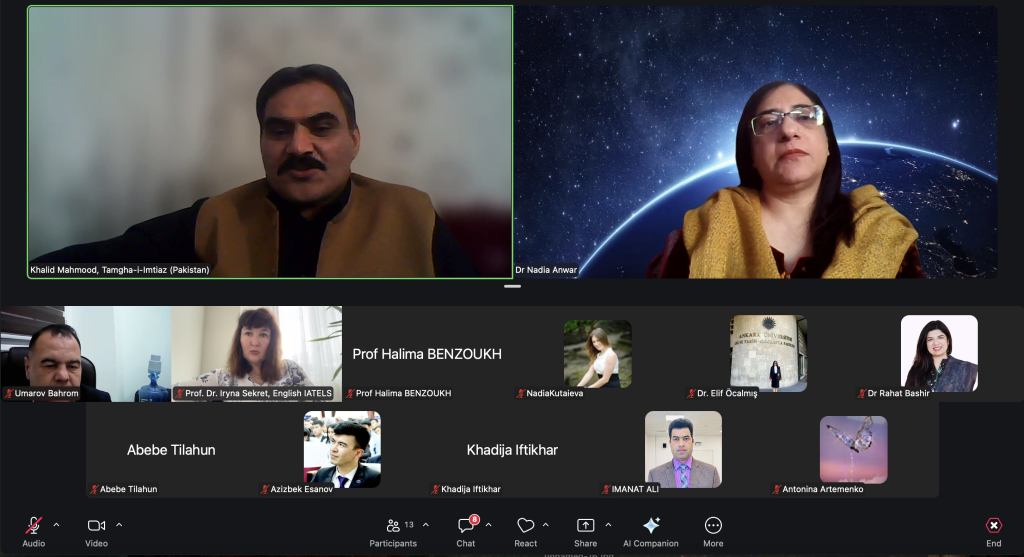
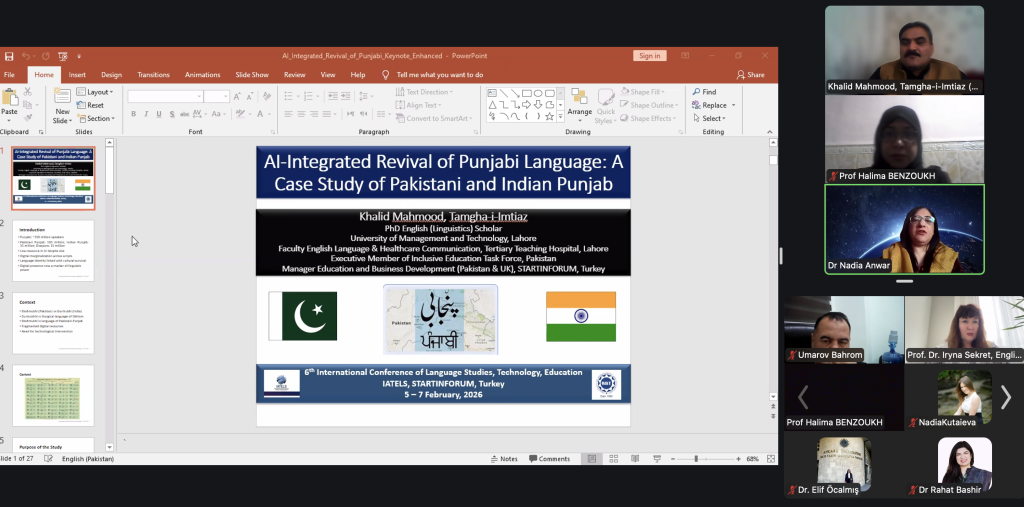
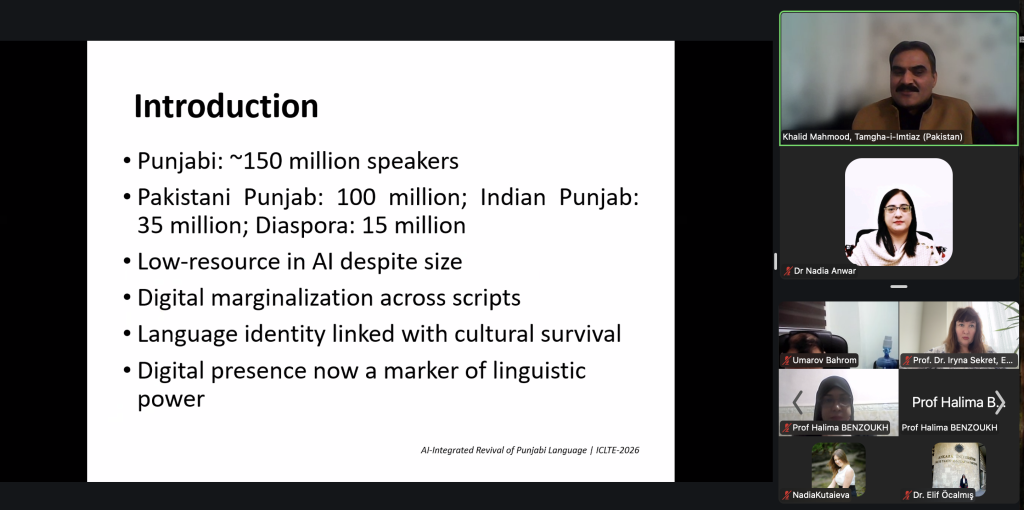
In one of the most emotionally resonant sessions, Khalid Mahmood (UMT, Pakistan) presented a roadmap for the revival of the Punjabi language. Despite having over 100 million speakers, Punjabi faces a unique “script barrier” between the Shahmukhi (Pakistan) and Gurmukhi (India) writing systems.
- AI as a Unifier: Khalid proposed an AI-integrated framework for automated transliteration. This would allow literature from both sides of the border to be accessible to everyone, effectively using technology to heal a historical linguistic fracture.
- Digital Presence: The study emphasized that for a language to survive in 2026, it must have a robust digital footprint in AI datasets.
AI Ethics and the “Fifth Skill”
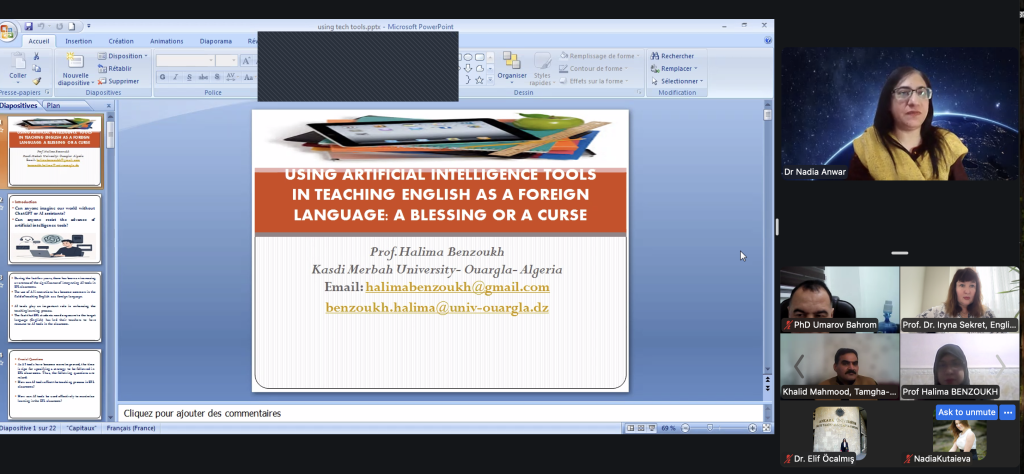
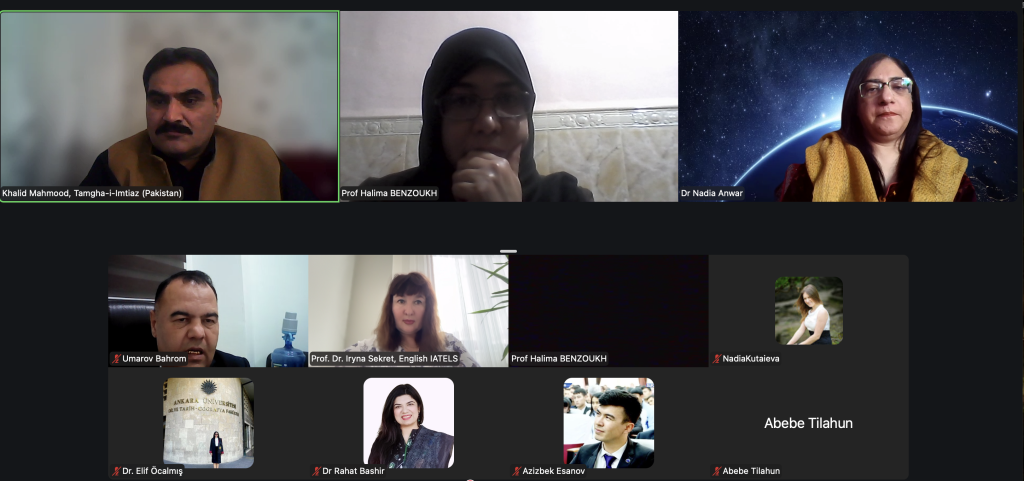
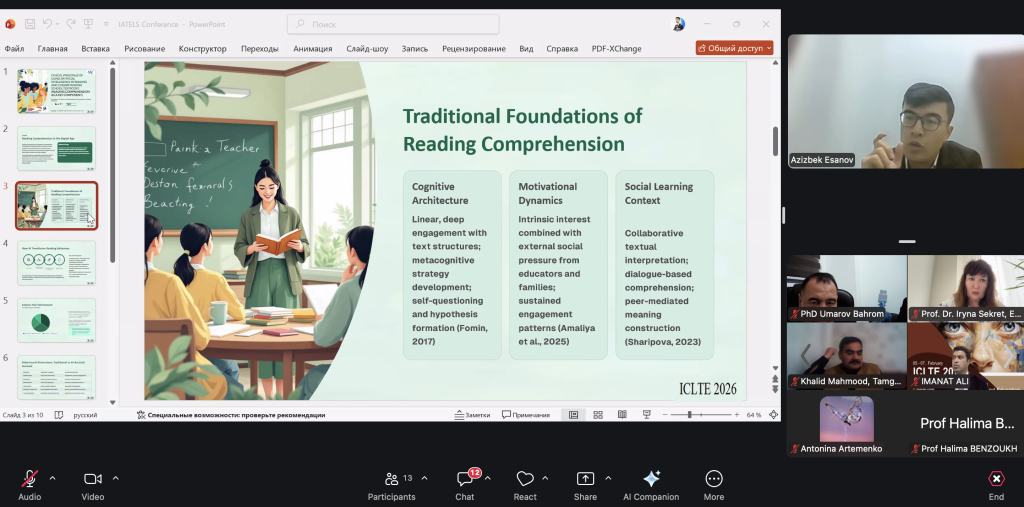
The afternoon took a philosophical turn as Professor Halima Benzouk and Assoc. Prof., Dr. Umarov Bahrom Norboevich (Head of the Department of the Surkhandarya Regional Center for Pedagogical Skills Uzbekistan) together with Mr Azizbek tackled the ethics of the classroom.
- The Fifth Skill: The room largely agreed that “AI Literacy” is now the fifth language skill, alongside reading, writing, speaking, and listening.
- SMART Objectives: Prof. Halima urged educators to use the SMART framework (Specific, Measurable, Achievable, Relevant, Time-bound) when selecting AI tools, ensuring they enhance rather than replace critical thinking.
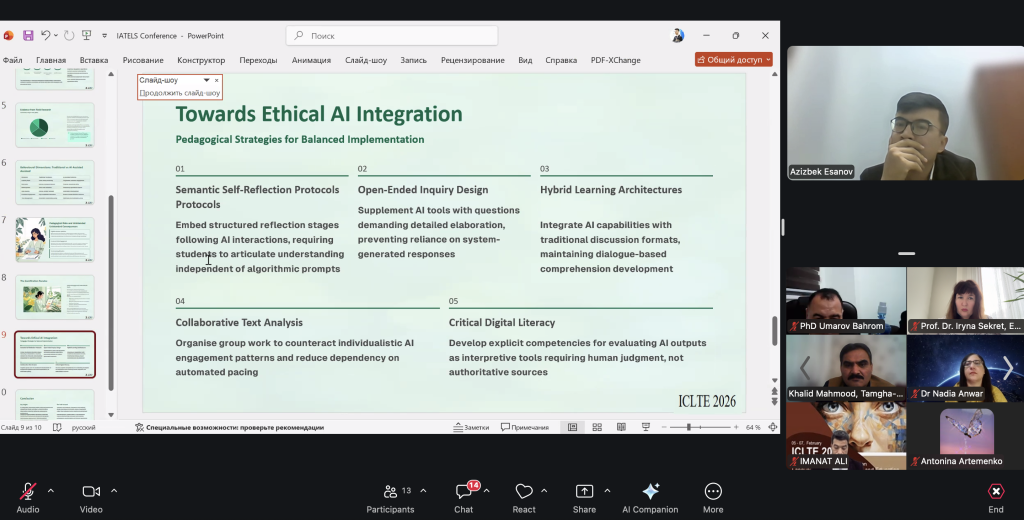
- The Ethics of Reading: Assoc. Prof., Dr. Umarov Bahrom and Mr. Azizbek presented a 5-point manifesto for using AI in school textbooks, emphasizing transparency and the protection of student creativity against “algorithmic bias.”


Global Contexts: Urdu in Turkey and Multilingual Corpora
The day rounded out with diverse linguistic studies:
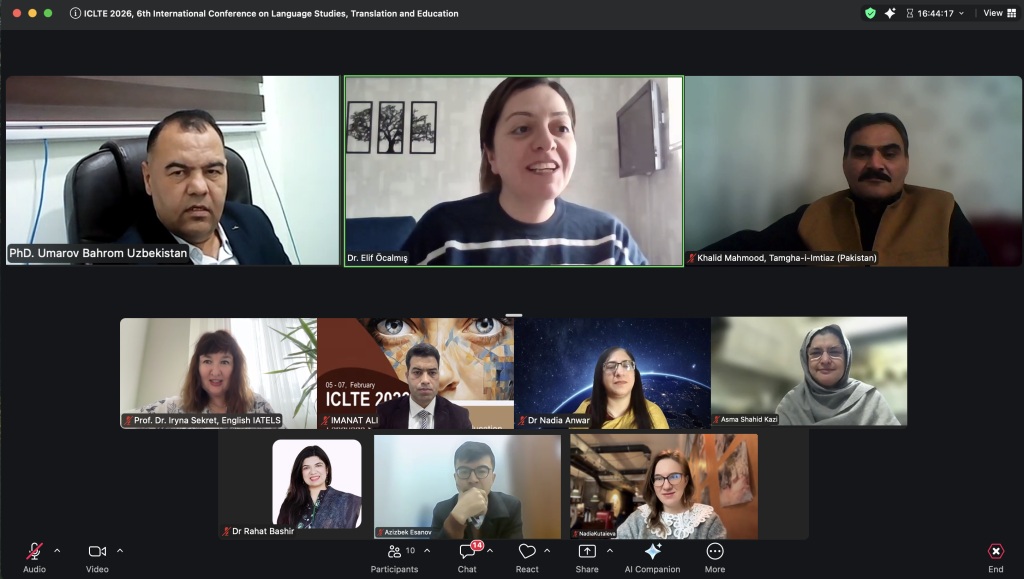
- Urdu in Turkey: Dr. Elif Ocmis shared her research on teaching Urdu to Turkish students, highlighting how shared literary history can be a powerful motivator when combined with mobile-assisted learning.

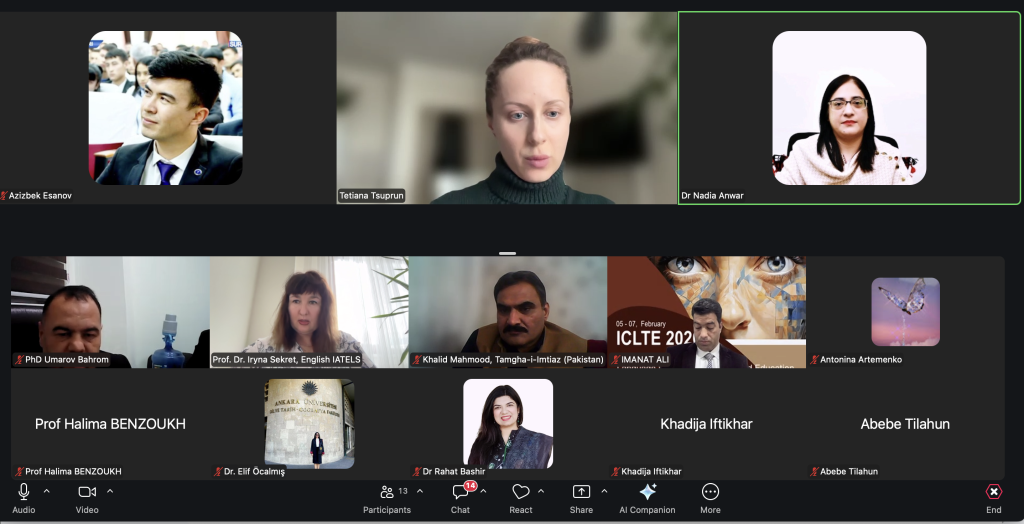
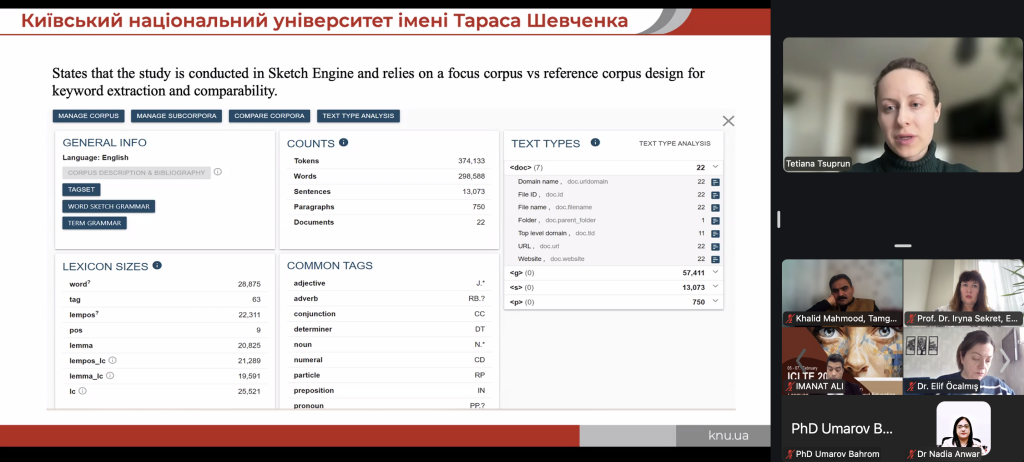
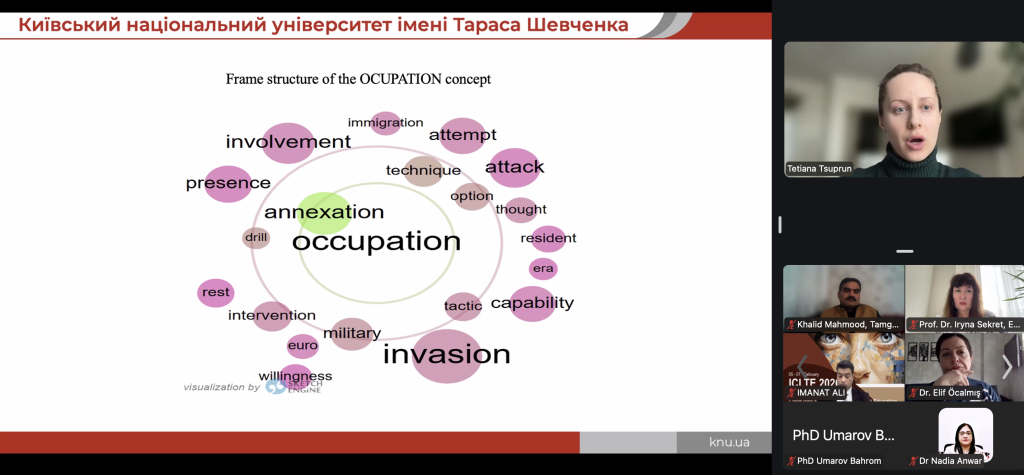
- The Concept of “Occupation”: Tetiana Tsuprun provided a rigorous corpus-based study comparing how English, French, and Ukrainian discourses frame the idea of work—showing that even a single word can reveal deep-seated societal differences.


What’s Next?
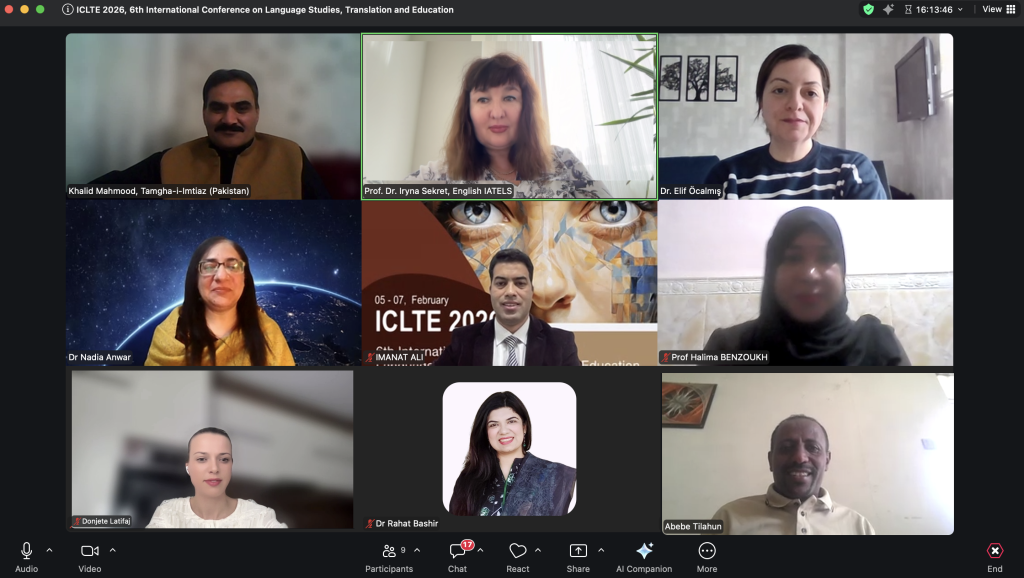
As Day 1 came to a close, the focus shifted from theory to action.
- Nadia Kutaieva and various university representatives are now in talks to finalize details for international academic cooperation.
- Interactive Methodology: Antonina Artemenko (KNEU, Ukraine) reminded the audience that despite the AI hype, communicative games and human-led interactive scenarios remain the most effective ways to track true student progress.







Comment (1)
Wow, great recap! I especially like “the theory to action” part! It is so great when potential cooperations arise after productive conferences 💛
I am looking forward to exploring ways to parter up!