
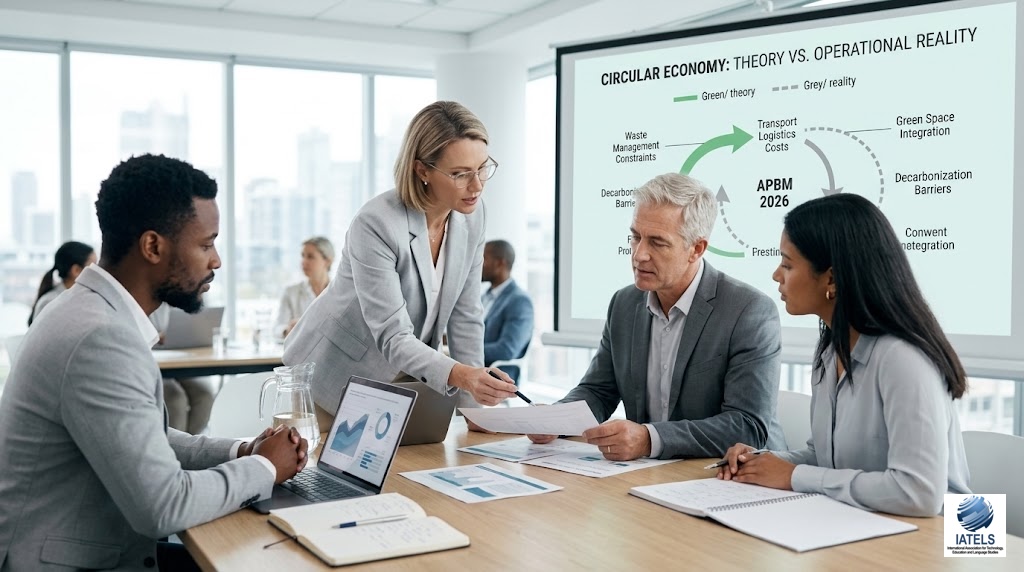
APBM 2025 Sustainability Collision Lab: Theory Meets Practice
The integration of scientific research into industrial operations remains one of the most critical challenges in contemporary sustainable development. While academic literature provides robust theoretical models for environmental mitigation, corporate managers frequently encounter operational, financial, and regulatory constraints that impede implementation.
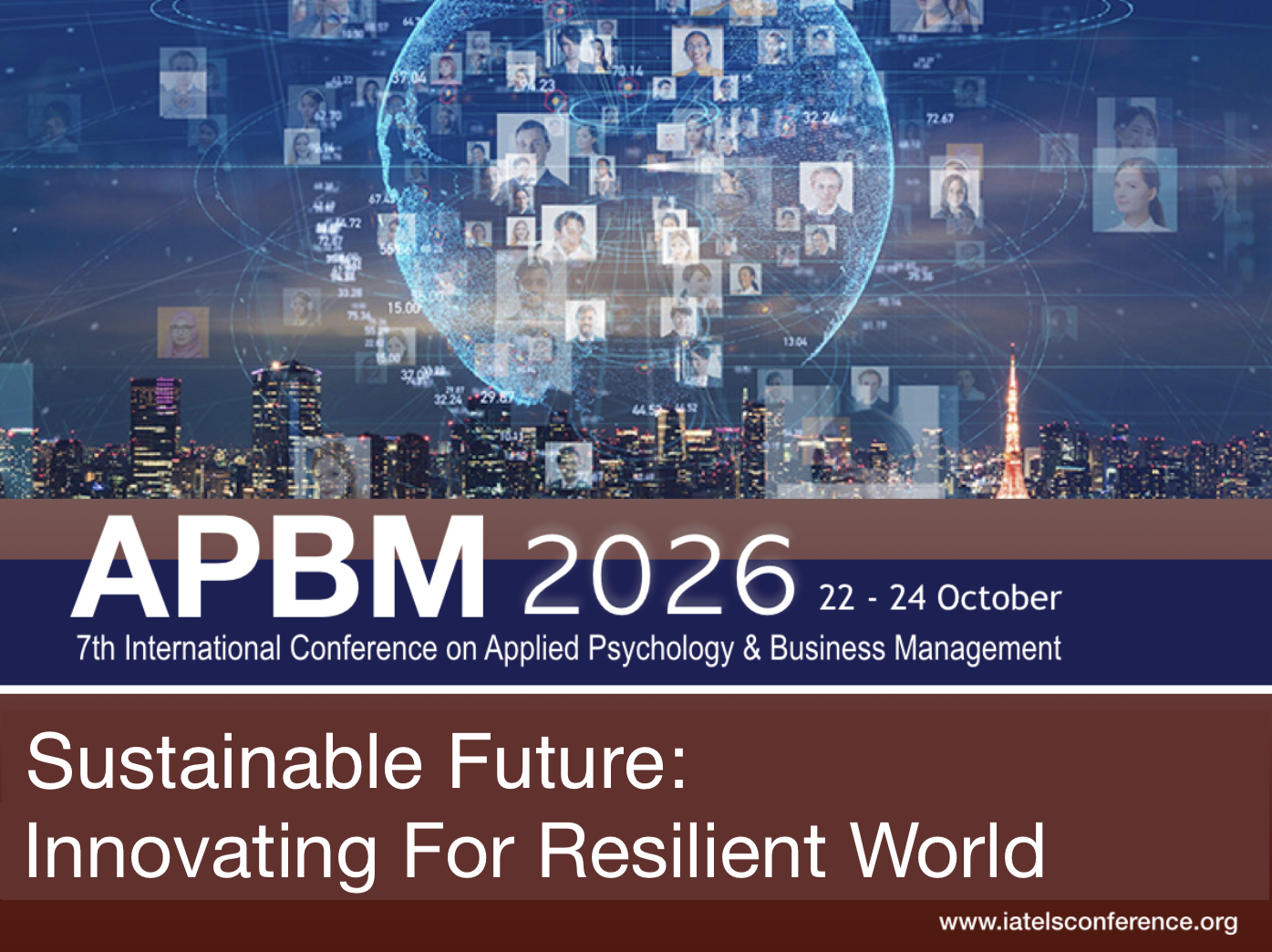
To address this division, the 7th International Conference on Applied Psychology and Business Management (APBM 2026) introduces the Sustainability Collision Lab: Theory Meets Practice. This specialized session serves as an interactive, consensus-building platform where cutting-edge empirical research is directly evaluated against current corporate and industrial realities. We invite university researchers, environmental engineers, municipal planners, and corporate executives to participate in this structured, peer-to-peer dialogue.
Objective of the Lab
The primary objective of the Sustainability Collision Lab is to reconcile the divergence between theoretical research and corporate execution.
The session is designed to pressure-test academic models under real-world economic conditions, while simultaneously providing business managers with scientifically verified frameworks to guide their sustainability strategies.
Distinctive Methodology of the Lab
Unlike standard lecture-based conference tracks, the Collision Lab utilizes an interactive, debate-driven format. The session begins with a brief presentation of a theoretical model, followed immediately by an industry case study highlighting current operational bottlenecks. The floor is then opened for structured analysis, allowing participants to cross-examine data, challenge baseline assumptions, and collaboratively refine the proposed methodologies.
Core Focus Areas and Research Questions
The lab is structured around four critical arenas where the friction between conceptual design and practical execution is highest:
-
Waste Management: Obstacles to Comprehensive Circular Economies
-
The Context: Academic research offers sophisticated frameworks for closed-loop material cycles and absolute supply chain traceability. However, industrial operators must manage volatile global recycling markets, prohibitive sorting costs, and regulatory frameworks that lack standardization.
-
-
Transport & Logistics: Infrastructure and Capital Barriers to Green Transit
-
The Context: Systems engineering models demonstrate optimized, zero-emission supply networks. In practice, logistics firms face legacy infrastructure deficits, substantial capital expenditures for fleet electrification, and conflicting cross-border shipping regulations.
-
-
Green Spaces & Urban Architecture: Balancing Ecological Integration with Commercial Demands
-
The Context: Urban sociology and environmental psychology indicate that biophilic design significantly mitigates urban heat islands and enhances workforce well-being. Conversely, developers and municipal economists must operate within highly competitive real estate markets driven by rapid commercial expansion.
-
-
Decarbonization: Reconciling Net-Zero Mandates with Operational Continuity
-
The Context: Macroeconomic and climate models dictate aggressive timelines for fossil-fuel divestment. Industrial manufacturers, however, must maintain production baselines, preserve employment stability, and mitigate the high financial risks associated with emerging clean-tech infrastructures.
-
Expected Outcomes and Professional Benefits
For Academic Researchers: Participants will gain direct insight into the commercial and regulatory barriers that cause theoretical models to stall during deployment. This feedback is essential for developing highly viable, fundable, and impactful future research designs.
For Business Leaders & Policymakers: Executives will acquire data-driven, peer-reviewed frameworks to resolve immediate compliance deadlocks, moving organizational strategy beyond superficial reporting into verified operational sustainability.
For Business Leaders & Policymakers: Executives will acquire data-driven, peer-reviewed frameworks to resolve immediate compliance deadlocks, moving organizational strategy beyond superficial reporting into verified operational sustainability.
Registration and Abstract Submission
We welcome the submission of abstracts, case studies, and operational problem statements aligned with the core focus areas outlined above.
To secure your participation or submit your contribution to this session, please register through the central conference gateway: https://iatelsconference.org/apbm-2026-7th-international-conference-on-applied-psychology-and-business-management/ (Please select the “Sustainability Collision Lab” track during the registration process).

Prof. Dr. Iryna Sekret
IATELS Committee Chair STARTINFORUM
We created the Sustainability Collision Lab because it is time to bridge the gap between academic research and actual business operations. Too often, researchers design perfect environmental models on paper, while business managers struggle with the real-world costs and complex regulations that make those models hard to implement. This session is designed to remove lectures and replaces them with an open, honest debate where scientists must test their data against everyday corporate realities. By bringing university professors, corporate executives, and city planners to the same table, we are changing how conferences work—moving from just reading slides to building real partnerships. Ultimately, our goal is to make sure great scientific ideas don’t just stay trapped in academic journals, but actually become practical, data-driven solutions that companies can use right now.









Leave a Reply