
ICLTE 2026: Resilience, Ethics, and the Human Dimension of the Digital Age
ICLTE 2026 Recap: Day 2
The second day of the 6th International Conference on Language Studies, Translation and Education (ICLTE 2026) was a profound exploration of what it means to be human in an increasingly digital and often turbulent world.
From the heart-wrenching realities of educators in war-torn Ukraine to the ethical complexities of artificial life, the sessions challenged participants to look beyond technology and focus on the souls—human and digital—that inhabit our educational ecosystems.
A Global Bridge of Resilience: Ukraine and Rome
The morning began with a sobering reminder of the global challenges facing academia.
The discussions touched upon a recent cyber-attack at a university in Rome (Italy) reported by Assoc. Prof., Dr. Vanessa Leonardi (Department of Humanities and Modern Cultures, Sapienza University of Rome, Italy) forcing a temporary return to paper-based systems.
Together with that, the extreme conditions faced by the academicians in Ukraine were brought to the attention by the conference organizing committee.
As the result of such complications, most of the studies by Ukrainian authors were presented in a pre-recorded format.
Prof. Dr. Iryna (IATELS Committee Chair) shared insights into the harsh reality of teaching amidst freezing temperatures and power outages in Ukraine. In a moving show of solidarity, Dr. Rahat Bashir (UMT, Lahore, Pakistan) committed to documenting the experiences of Ukrainian clinicians and students.
The Initiative: The conference organizing team is going to explore Social Support Programs to raise global awareness and provide a platform for student and academician led solidarity initiatives.

The Ethics of Digital Life: Beyond “Digiants”
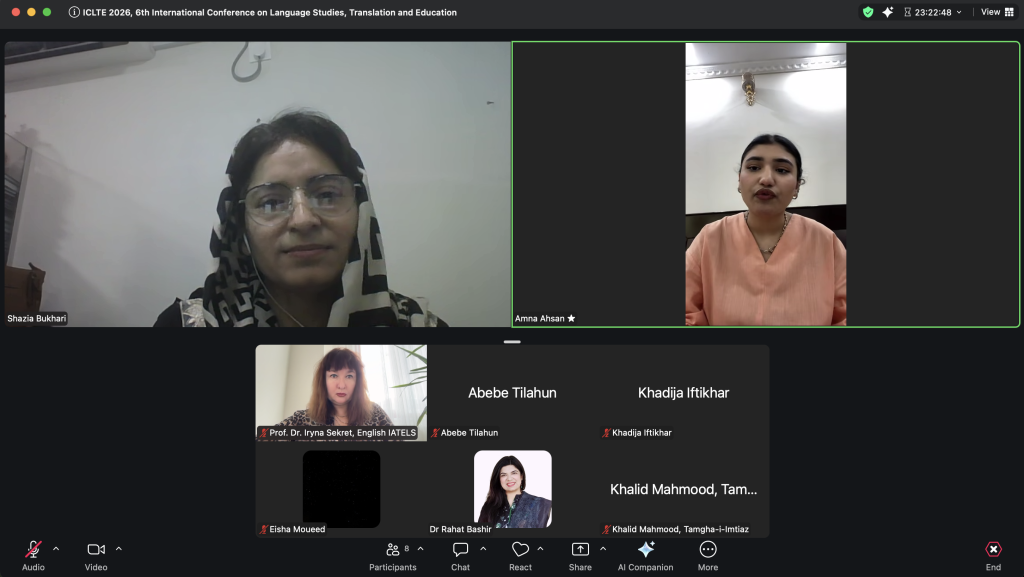
In a thought-provoking session chaired by Assist. Prof., Dr. Shazia Bukhari (Behria University Islamabad, Pakistan) , Amna Essan (UMT, Pakistan) delved into the world of Ted Chiang’s The Lifecycle of Software Objects. The presentation moved the AI conversation from “utility” to “stewardship.”
- Post-Human Ethics: Amna introduced the concept of “Digiants”—digital beings that learn and grow. She argued that these entities are not just tools, but complex beings requiring long-term ethical care.
- The Economic Failure: The session highlighted how platforms often abandon AI systems due to market shifts rather than technical obsolescence, raising the question: What is our moral obligation to the digital life we create?

Visual Literacy: How Pakistani Children Read Without Words
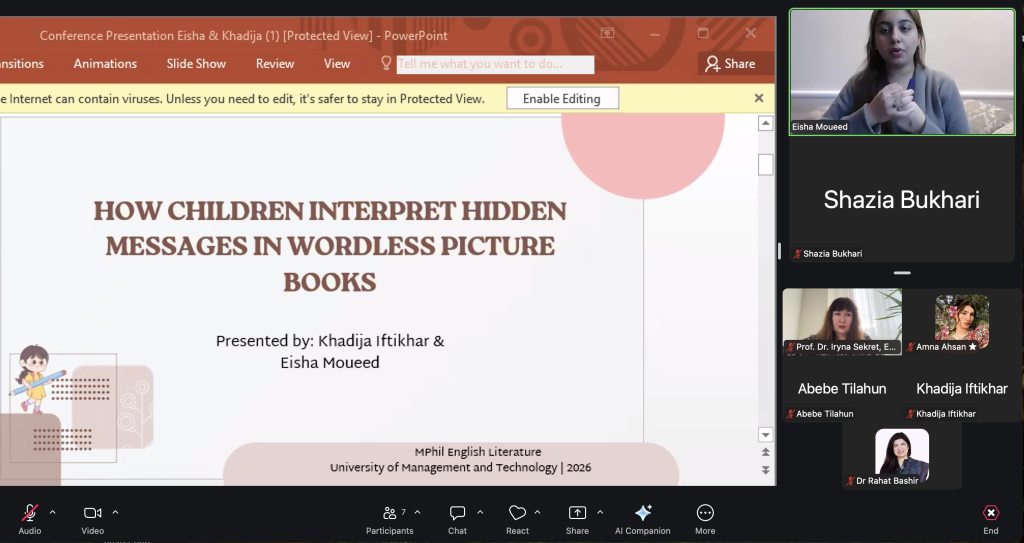
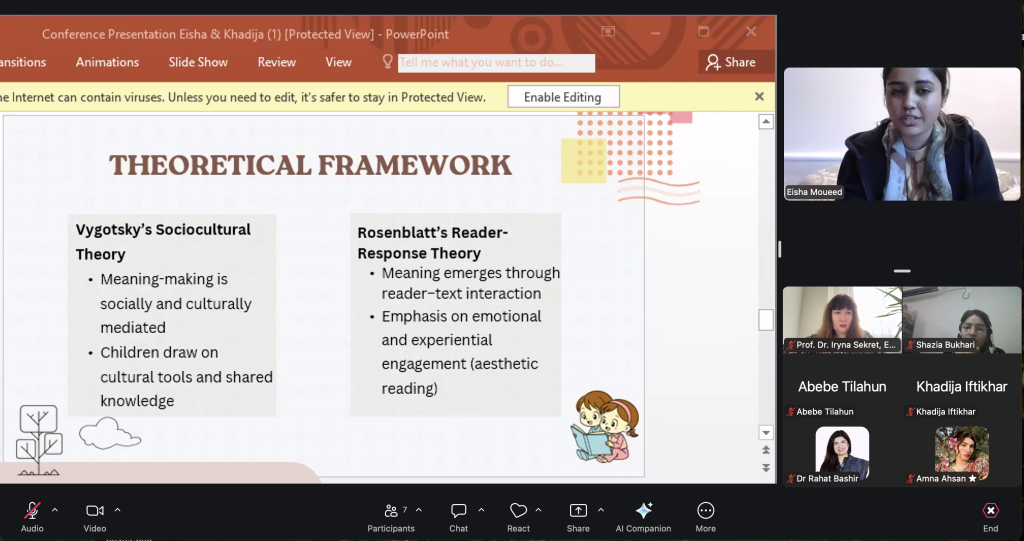
Shifting to early childhood education, Eisha and Khadija presented a qualitative study on how children in Pakistan interpret wordless picture books.
- The Power of Visuals: In a multilingual context, color symbolism and visual cues allow children to engage in active meaning-making without the barrier of text.
- Emotional Mapping: The research proved that wordless books are vital tools for developing emotional intelligence and cognitive flexibility in young learners.

Critical AI Literacy: Shifting from Fear to Acceptance
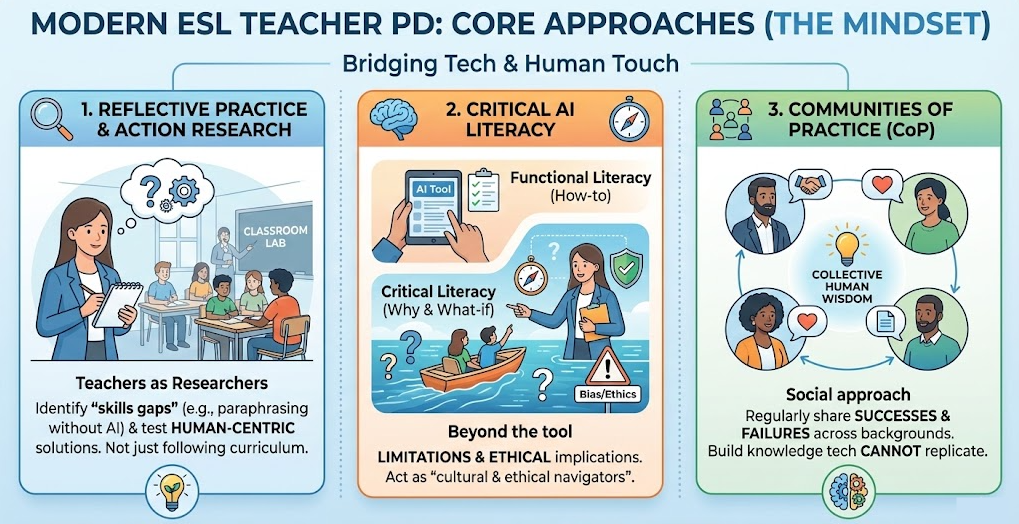
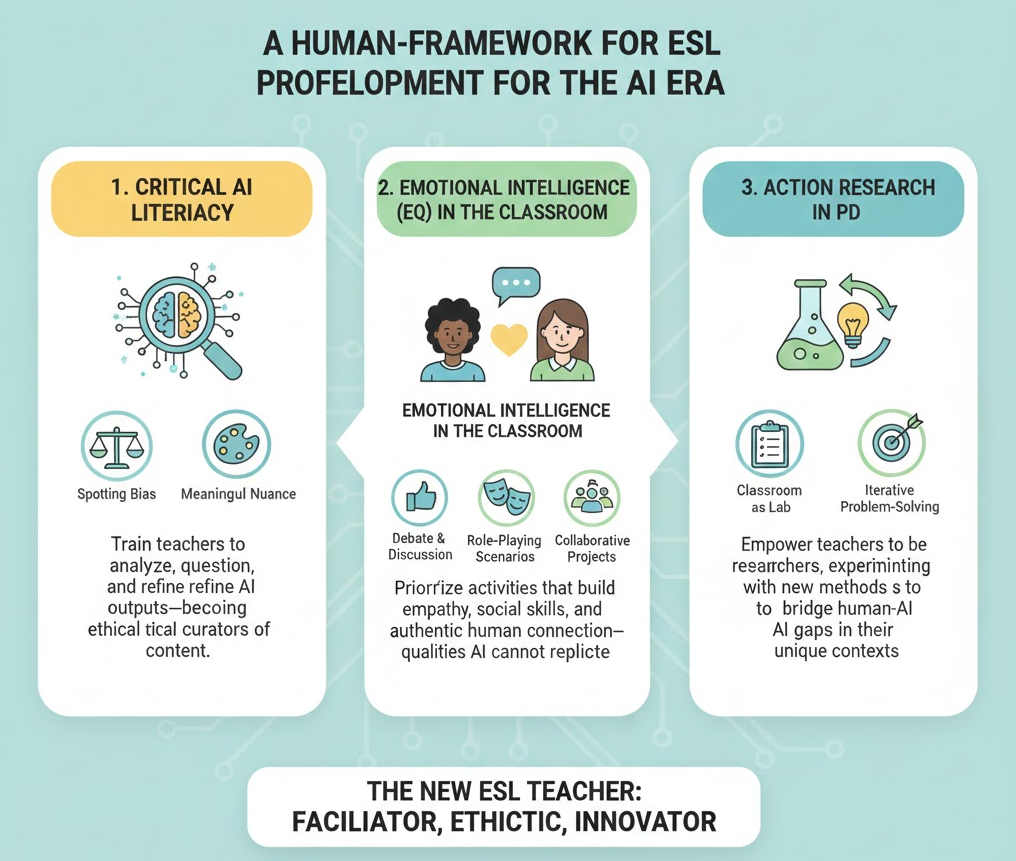
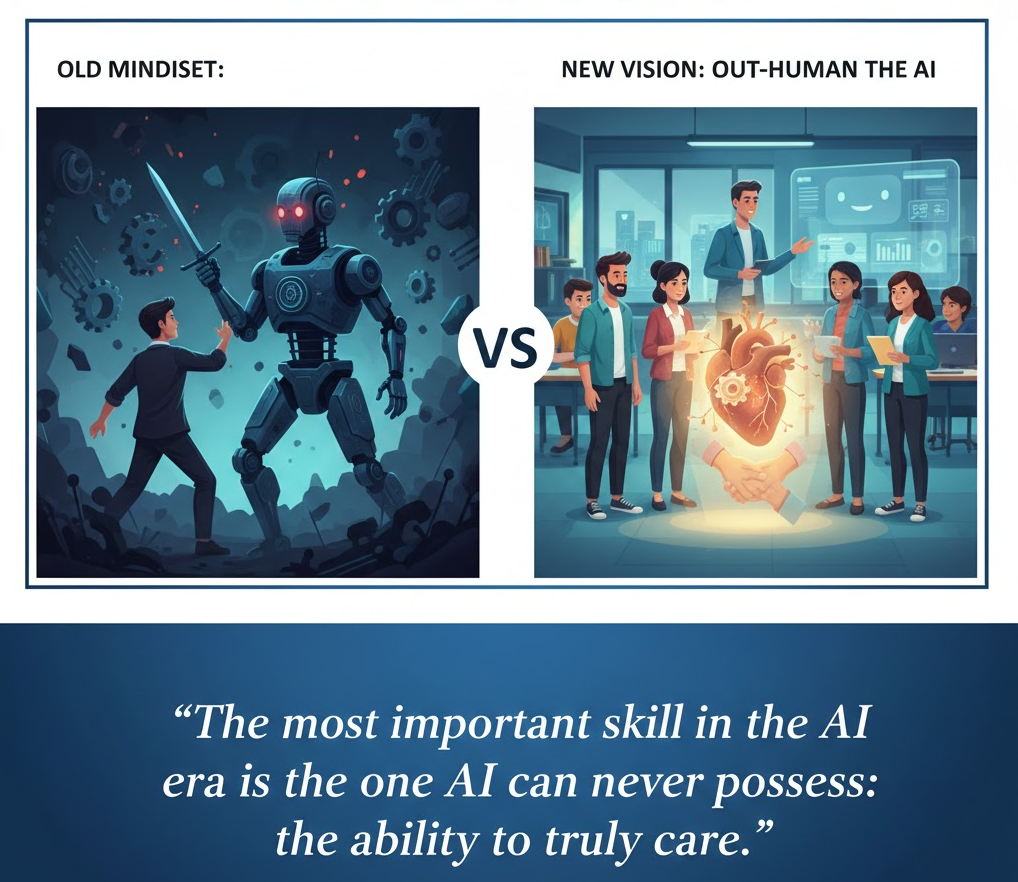
The session continued with the presentation by Prof. Dr. Iryna Sekret (IATELS Committee Chair) “Bridging the Skills Gap: Reclaiming Human-Centric Pedagogy in ESL Professional Development for the AI Era“ highlighting the need to review the professional development for language teachers from methodological and practical points of view. Prof. Dr. Iryna Sekret discussed the evolving attitudes towards AI in education, highlighting a shift from fear to acceptance and the need for professionals to update their skills in this rapidly changing technological era. She emphasized the importance of AI literacy, human-centric resilience, teacherpreneurship, and multimodal proficiency in English language teaching. The professor also addressed the “convenience trap” of over-reliance on AI tools, urging educators to focus on teaching students the human aspects behind technology and fostering critical thinking. She concluded by advocating for a return to human values in AI implementation and shared insights from a professional development project for Uzbekistan school principals, which included practical activities and cultural enrichments.
Critical AI Literacy for Educators
The meeting focused on critical AI literacy and its importance for educators, students, and professionals.
Prof. Dr. Iryna Sekret emphasized the need for critical thinking when using AI technologies, citing examples of harmful consequences from over-reliance on AI. She proposed a new approach to teacher professional development that focuses on their individual needs and practical applications rather than theoretical knowledge.
The discussion also touched on the limitations of AI, with Assist. Prof., Dr. Abebe Tilahun Mogesse (Department of English Language and Literature, Hawassa University, Ethiopia) highlighting the importance of human skills in AI usage.
AI in Reflective EFL Learning
The session went on with the presentation by Dr. Olha Herasimova (Department of Foreign Languages, Faculty of Marketing, Kyiv National Economic University named after Vadym Hetman Kyiv, Ukraine) who discussed the role of artificial intelligence in enhancing reflective learning and professional identity formation in English as a Foreign Language (EFL) and English for Specific Purposes (ESP) instruction.
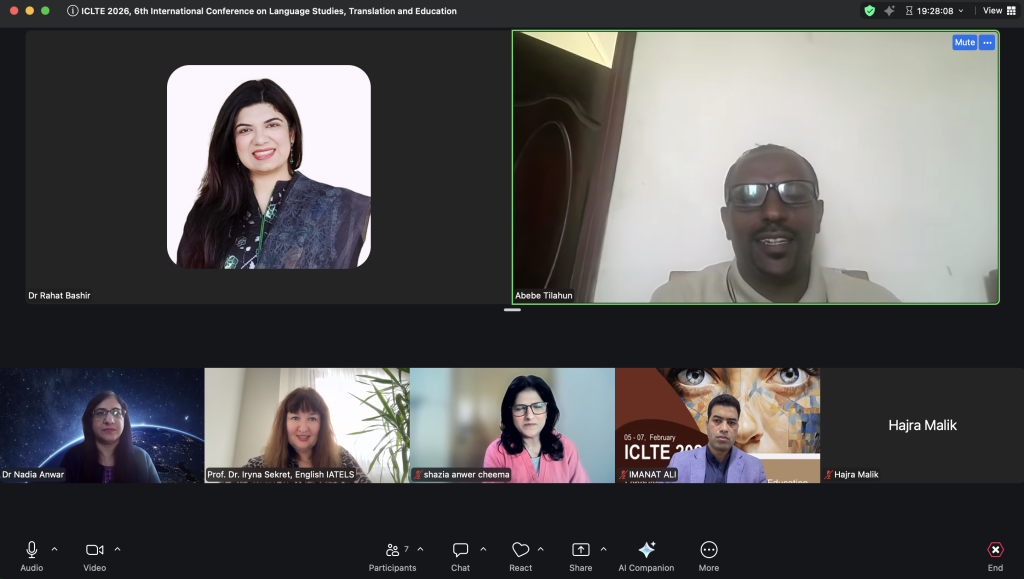

The session chair, Dr. Shazia, encouraged the audience participation and appreciated the voluntary contributions of presenters who filled a scheduling gap. The discussion highlighted the importance of AI in education, emphasizing its potential to support reflective learning rather than replace human teachers, and concluded with the introduction of the next session chaired by Assist. Prof., Dr. Muhammad Numan (University of Management and Technology, Lahore, Pakistan).
Social Media and the Psychological Landscape
The following sessions addressed the psychological pressures of the 21st century:
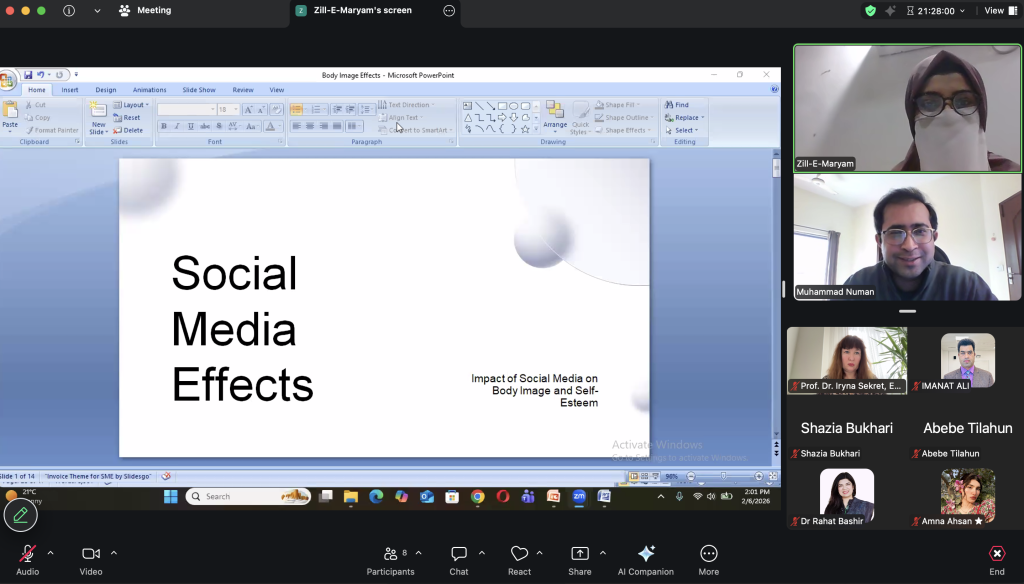
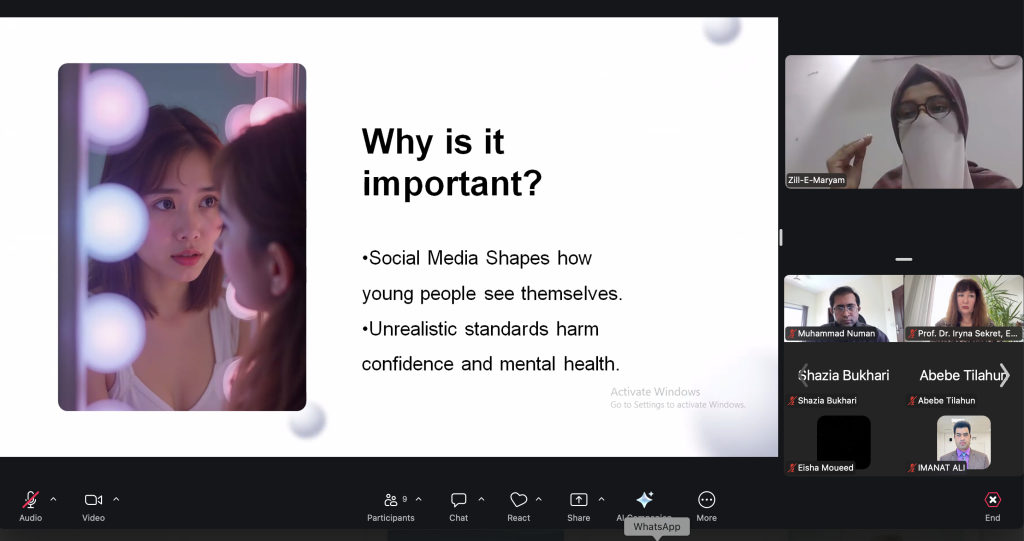
- Body Image & Youth: Zill-E-Maryam presented a distressing look at how “edited reality” on Instagram and TikTok affects self-esteem in young adults (ages 18-25). The call to action: Mental health interventions must be integrated into digital literacy programs.

- Internalized Abuse: In a powerful literary analysis, Mah e Nao (UMT, Lahore, Pakistan) applied a gynocriticism framework to Tahmina Durani’s My Feudal Lord, sparking a deep discussion on the systemic nature of patriarchal violence and the ongoing struggle for gender equality.


The Path Forward: Human-Centric Resilience
As Day 2 morning sessions concluded with the most common thread as Human-Centric Resilience. Whether it is the resilience of a teacher in Ukraine, the emotional bond between a child and a book, or the ethical stewardship of an AI system, the conference proved that technology is only as valuable as the human values we bring to it.






Leave a Reply