

APBM 2026 Workshops: Novelty in PhD Research
Building upon the vital insights gathered from the doctoral community during the highly successful workshop at ICET 2026, IATELS is introducing a second, deeply essential training track for the 6th International Conference on Applied Psychology and Business Management (APBM 2026).
During our previous sessions, participants continually raised a profound, systemic anxiety: How do you discover a genuinely original scientific gap when thousands of global papers are published daily in your field?
To directly answer this universal academic challenge, we are announcing a specialized, hands-on workshop designed to dismantle research stagnation and unlock deep intellectual creativity.
How to Make Your Study Truly Innovative When Everything Has Already Been Explored?
Date and Time
Thursday, 22 October 2026
4:30 pm – 6:30 pm (Perth time, Australia)
/ 11.30 am – 01.30 pm (Istanbul time, Turkiye)
Main Aims of the Workshop
This workshop is designed to transition researchers away from defensive, derivative, “incremental gap-filling” and elevate them into high-impact, disruptive contribution strategies. The main aims are to:
-
Demystify “Novelty”: Redefine originality not as discovering an entirely new planet, but as looking at familiar, heavily researched landscapes through entirely new conceptual, cultural, and methodological filters.
-
Overcome Research Stagnation: Equip candidates with systemic tools to break out of crowded academic echo chambers and identify hidden contradictions in existing literature.
-
Bridge Theory and Market Application: Align academic inquiry with current national and international societal needs, transforming an abstract thesis into a high-value, practically urgent solution.
Main Subtopics
The workshop is organized around four practical, strategically engineered modules:
1. Advanced Gap Engineering & Problem Reframing
-
Moving past weak “this has not been studied in my specific city/country” justifications. Learning how to identify conceptual clashes, out-of-date baseline assumptions, and operational failures in established theories.
2. Methodological Innovation & Transdisciplinary Fusion
-
How to import tools, data modeling, or psychological frameworks from unrelated disciplines (e.g., merging behavioral economics with tech architecture) to instantly synthesize an uncrowded research angle.
3. Contextual and Cross-Cultural Recalibration
-
Utilizing regional specificities, transitioning economies, or unique national organizational landscapes as complex, dynamic environments that actively challenge Western-centric or legacy corporate management models.
4. Designing the “So What?” Factor
-
Structuring the abstract, discussion, and conclusion chapters so that international reviewers and journal editors instantly recognize the practical urgency, commercial value, and policy-level significance of the study.
Main Questions for Discussion
Participants, supervisors, and panel leads will engage in collaborative, solution-focused debates around the following core questions:
-
How do you separate an authentic research gap from a trivial one? Finding the boundary between a variable that hasn’t been studied because it’s genuinely important versus one that hasn’t been studied because it yields no value.
-
What constitutes novelty in the era of AI-generated literature? When algorithms can instantly map and summarize vast fields, how do human researchers inject true intuitive leaps and unique cognitive architecture into their research design?
-
The Supervisor-Candidate Alignment: How can supervisors push candidates toward high-risk, high-reward innovative topics while simultaneously managing the practical boundaries of thesis submission timelines?
-
How can old data tell a new story? Methods for re-evaluating historical empirical datasets through modern psychological or digital-era business management theories to generate novel conclusions.
Tracking Real Progress: Methodological and Psychological Anchors for Doctoral Excellence
The path to a successful doctoral defense is defined as much by rigorous structural discipline as it is by personal psychological resilience.
To provide PhD candidates and supervisors with concrete strategies for navigating these critical phases, we have also added two essential subtopics to our upcoming workshop series:
1. Scope Governance and Strategic Realignment
-
The Structural Barrier: Doctoral researchers frequently battle scope creep, where the pursuit of exhaustive literature leads to fragmented objectives, diluted methodologies, and a loss of the central research question.
-
The Methodological Solution: This session delivers practical frameworks for narrowing the research architecture. Participants will learn how to implement strict boundary conditions around their field studies, filter out non-essential data variables, and maintain a sharp, publication-ready alignment between their hypotheses and empirical tests.
2. Sustainable Progress and Psychological Resilience in Independent Research
-
The Structural Barrier: The isolated nature of prolonged, independent doctoral work highly exposes researchers to systemic burnout, chronic self-doubt, and operational stagnation.
-
The Methodological Solution: Moving past generic advice, this track analyzes the psychological ergonomics of long-term research. We provide actionable workflows for managing academic isolation, setting realistic velocity metrics, and establishing peer-accountability networks to sustain consistent momentum without sacrificing mental well-being.
Expected Outcomes and Benefits for Participants
For PhD Students & Early-Career Researchers:
-
A Refined Research Blueprint: You will walk away with a clear, defensible matrix that explicitly articulates the exact novelty of your thesis, making you highly bulletproof during your proposal defense or viva.
-
Enhanced Publishing Potential: Learn the framing formulas that capture the attention of high-tier, Scopus-indexed, and Springer monograph editors by emphasizing your work’s unique conceptual evolution.
For PhD Supervisors & Principal Investigators:
-
Mentorship Frameworks: Gain access to structured brainstorming models and questioning techniques to help your students break through cognitive blocks and move past derivative topics.
-
Elevated Departmental Impact: Learn how to steer your laboratory’s or department’s collective theses toward high-impact topics that boost institutional citations and attract international funding.
For All Research Practitioners:
-
Thematic Networking: Join cross-border research clusters with peers facing identical strategic bottlenecks, establishing foundations for future collaborative, multi-author international papers.
-
Professional Validation: All active participants will be awarded an official IATELS Professional Development Certificate in Advanced Research Methodology and Innovation Design.
Join the Innovation Track at APBM 2026
Join international peers, expert consultants, and senior academic mentors to actively construct the true novelty of your scientific legacy at APBM 2026.
🔗 Registration & Workshop Selection:
This specialized masterclass runs concurrently with the APBM 2026 session tracks. Seats are limited to preserve an intimate, interactive workshop setting.
Secure your access, align your abstracts, and review full participation schedules on our permanent central page: https://iatelsconference.org/apbm-2026-7th-international-conference-on-applied-psychology-and-business-management/ (Please specify the “Novelty & Innovation Doctoral Workshop” option upon registration).
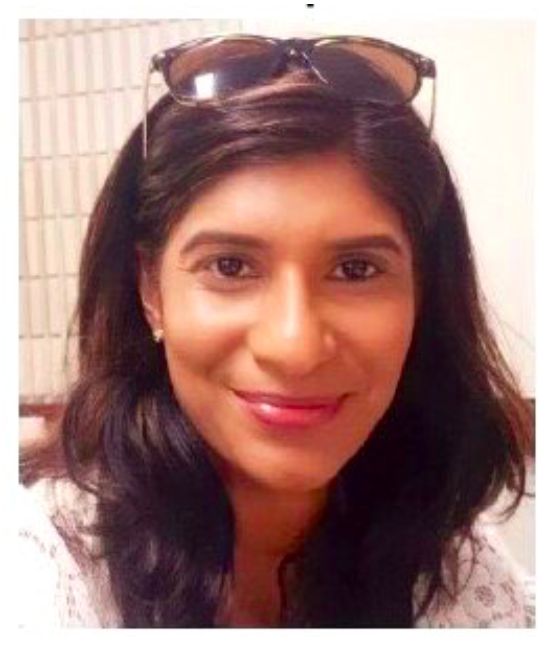
Dr. Rohini Balapumi
Curtin University, Perth
Australia
Based on my past collaborations with IATELS, particularly during the doctoral workshops at ICET 2026, I have witnessed first-hand the incredible drive and intellectual curiosity of early-career researchers. The participants consistently voiced their anxiety about defining a truly original gap, which is precisely why this new workshop for APBM 2026 is so critical and timely. It is designed specifically to dismantle the myth that ‘everything has been explored’ and move candidates past generic research objectives toward high-impact, disruptive innovation strategies. We will focus on advanced reframing and transdisciplinary approaches that empower supervisors and candidates to find the ‘So What?‘ factor in any domain. This isn’t just about thesis completion; it’s about providing the methodological tools and publishing blueprints required for sustainable research novelty in a competitive global arena.








Leave a Reply